Father Rahner and the Latin Mass which he said till the end
Ambivalence in Father Rahner
Defining the essence of the Mass
Following our mention of Karl Rahner’s disdainful attitude toward adherents of the traditional liturgy, we received three letters pointing out that Rahner himself continued to celebrate using the old form until the end of his life—at least for his daily "private Masses." While this may appear contradictory at first glance, it can be explained—or at least made understandable—without much difficulty.
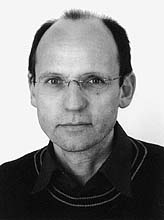
There are no pictures that could be found of Father Rahner saying Mass, I did however find one of him smoking.

A key motive for Rahner sticking to the form of celebration with which he was familiar was likely a sentiment akin to Quod licet Iovi, non licet bovi (What is permitted to Jupiter is not permitted to the ox). Men of his stature did not need the new form to arrive at a proper understanding of the Mass. This notion surely appealed more to the renowned scholar—who had just turned 65—than did invoking No. 19 of the "Instructio de constitutione Apostolica "Missale Romanum" gradatim ad effectum deducenda" (Instruction on the Gradual Implementation of the Apostolic Constitution Missale Romanum) of October 20, 1969. That section states: "Priests of advanced age who celebrate Mass without a congregation, and who may experience significant difficulty with the new Ordo Missae and the texts of the Missale Romanum and the lectionary to be used, may—with the consent of their Ordinary—continue to use the existing rites and texts."

Nevertheless, this section remains crucial for understanding the essential nature of the reform: the old Missal was not discarded or abolished for doctrinal reasons; rather, its use was generally revoked on disciplinary grounds, yet it could still be permitted—albeit with restrictions. Thus, it remained legally valid—much like how, upon the introduction of the 1570 Missal, the older rites were expressly recognized in the bull "Quo primum", provided they had been practiced for more than 200 years and could therefore be considered orthodox. But back to Rahner. Legitimate criticism of this pioneer of the modernization of the faith and of secularization must not lead to the creation of an undifferentiated image portraying him as a possibly deliberate and systematic corrupter of the Church. At worst, such an accusation might be directed at the disciples and acolytes who cling to his often cryptic pronouncements, even though their destructive potential has since become clearly apparent. Yet this potential is not present in all his writings. To cite one example particularly relevant to the topic: the slim volume published in 1950, "Die vielen Messen und das eine Opfer" ("The Many Masses and the One Sacrifice"), reveals a deeper and far more orthodox understanding of the nature of the Holy Sacrifice of the Mass—a subject fiercely debated even then—than the view that has since become commonplace in the trendy theology of the day.
It is quite possible, then, that the priest Karl Rahner—like so many of his fellow clergy—struggled to rediscover, within the new form of the liturgy, those spiritual sources of strength that had made his priestly life possible in the first place, and to harness them for himself and others during the most intimate moments of that life. Not everyone who, after 1970, stuck—at least privately—to the traditional form did so out of opposition to the Pope and the revolution he had mandated; they simply could not do otherwise. This brings us to one of the saddest and, to date, least discussed chapters of the great pastoral cultural revolution: what kind of understanding of the spiritual lives of devout people must one possess to intervene with such ruthlessness in the innermost acts of prayer—hitherto shaped and prescribed by the Church—of priests and the laity, as the architects and implementers of this reform did?
By comparison, the proverbial "butcher's dog"—once frequently cited as a symbol of ferocity—must have possessed an exceptionally tender nature.
This is not to excuse the Arch-Heresiarch Rahner who did such damage to Holy Mother Church, although some like George Weigel do.





.jpeg)

Comments