Modernist synodalist feminist theologian dismisses Augustine, Aquinas and Anselm as the "usual suspects" to make theology in her own graven image
Gunda Werner: Theology is not "Forgetting Christology"
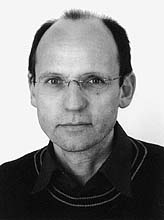
The Bochum-based dogmatic theologian Gunda Werner

Question: Professor Werner, Cardinal Walter Kasper is urging German-speaking theologians to engage more in Christology. Do you feel personally addressed by this?
Werner: I don't feel personally addressed, if only because I don't understand his concern, from several perspectives. Just recently, the anniversary of the Council of Nicaea last year led to a great deal of Christological research; there were many events and publications on how to understand the Christology of the Council of Nicaea, that is, the consubstantiality of Jesus with the Father. Furthermore, much research has been and continues to be conducted on Christology – historically, dogmatically, comparatively, denominationally, and ecumenically. Besides more traditional topics, there are also new areas being explored from a Christological perspective, for example, with regard to how Christology and creation can be considered together. Elizabeth Johnson, with her concept of "Deep Incarnation," is an example of this: that humans are deeply connected to the whole world through their materiality, and that Christ is too.
Question: An American theologian—Kasper spoke of German-language theology.
Werner: That's the next point: Is the category "German-language theology" even meaningful? What research is still limited to a single language area today? If there could be an impetus here, it would be to engage in a stronger dialogue between theologies in the English, German, and Spanish-speaking worlds, rather than desiring a provincialization of theology.
Question: The critique contrasts Christology and ecclesiology. Are they even a pair of opposites?
Werner: Even from the perspective of the dogmatic constitution "Lumen Gentium," this doesn't work: The entire first chapter of the Church Constitution consists of a Christological foundation for the Church. Salvation history is grounded in Christ, and the Church is presented as the locus of this salvation history, where the connection between God and humanity is to become visible. In the eighth chapter, the Church is then conceived as a complex entity consisting of a visible and an invisible form. This is placed in direct analogy to the Christological doctrine of the two natures, as formulated by the Council of Chalcedon. If one takes this seriously, then the Second Vatican Council connects ecclesiology with Christology, even to the point of analogical discourse on structure. Therefore, even in this dogmatic foundation of the Church, one cannot simply separate Christology and ecclesiology, but is called upon to clarify from both sides how this analogy can be interpreted. If the Church is to be a sacrament of God's presence among people, as Lumen Gentium 1 states, and this is grounded in Christology, then as a dogmatic theologian, I am somewhat perplexed when Christology and ecclesiology are presented as a pair of opposites.
Question: Cardinal Kasper has repeatedly expressed criticism of the Synodal Path, where ecclesiology and the question of ordained ministry have indeed touched upon many of the central points of contention. Is the criticism of a neglect of Christology perhaps actually more of a critique of German reform efforts?
Werner: That's how I understood it as well. But behind that lies the notion that these things can be so clearly separated: Christ here, the question of ordained ministry there. Yet, one must speak precisely about Christ and Christology when these ordained ministry is traced back to Christ in a direct logic and succession. One simply cannot avoid discussing both together. Researching a completely abstract Christology is difficult because, throughout the history of theology, there have always been interactions between ecclesiastical reality, the development of ordained ministry, and the understanding of Christ. And today, the question also arises as to what a purely abstract Christology has to do with the concrete lives of people and the Church.
Question: There's a theory that the Synodal Path simply didn't work theologically enough. What's your take on that?
Werner: I wasn't involved in the Synodal Path myself, but I've read all the texts. These texts are consistently theologically sound and well-argued. And that's no surprise when you look at the Synodal Path's approach: The decisions always had to be based on two perspectives—a more official one, represented by the blocking minority of bishops and other representatives of a more tradition-oriented perspective, and a more progressive one, represented by the reform-oriented members of the body.
Question: Wouldn't a bit more reference to theological tradition have helped?
Werner: When the suggestion is made to refer more strongly to the Church Fathers and the Middle Ages, I wonder what exactly is meant by that.
Probably the usual suspects: Augustine, Thomas Aquinas, Anselm of Canterbury.
Cathcon: What can be done with a theology so dismissive of the great sources?
The intention is probably not to uncover new theological sources, perhaps from women, from this period. It likely wouldn't be about engaging with Hildegard of Bingen and her Trinitarian theology, or Sor Juana Ines de la Cruz in her debate on Christ's salvific powers. The appeal to look to tradition always raises the question: Which tradition? Who decides who is quoted? Who belongs to the tradition? Even among the Church Fathers and in the Middle Ages, there were other traditions that represented a different Christology. I'm thinking of Duns Scotus—he is the originator of a Christological way of thinking that hasn't established itself as the mainstream of official theology, but which is worth exploring today.
Cathcon: The teaching of the Church on the Mystical Body of Christ. If you press the arguments of Duns Scotus too hard, you will end up thinking of the Church merely in terms of politics as is happening here. She is clearly unaware of the response of Duns Scotus when inquiring what happened if women attempted to receive Holy Orders. Effectively his response was "nothing".
Question: In what way?
Werner: Duns Scotus is, in a sense, the 'villain' of freedom. He conceived of God's twofold contingency: God was free to choose creation, and specifically this creation, and released it into freedom. For Joseph Ratzinger, this marks the beginning of a kind of evil in intellectual history, which, in a line of decline, leads from Luther and his concept of Christian freedom, through Kant and autonomy (misunderstood as autarky), to postmodernism and the 1968 generation. However, this idea of freedom could also be strongly grounded in Christology. Elizabeth Johnson does just that, recalling Duns Scotus, who argues that Christ need not always be conceived solely in terms of the Cross, that the Incarnation need not always be understood in terms of the Fall: the Incarnation as a consequence of God's essence as love. Such thinking, developed from a return to medieval theology, naturally has implications for ecclesiology and the question of ordained ministry—but perhaps not the ones Cardinal Kasper had in mind.
Question: Apparently, the "German-language theology" that Kasper refers to is not understood in Rome, or at least not perceived. How can "German-language theology" change this?
Werner: I'm not sure if it's even our task as academic theology to ensure that we are better understood in Rome. There's a massive tension between the intellectual and academic complexity of theology and what official doctrine makes of it—or doesn't make of it. On the one hand, there's an academic theology that operates in a complex, internationally networked way, combining very different lines of argumentation and modes of thought, and drawing on an extensive source base that extends far beyond the Middle Ages and the Church Fathers, incorporating current exegetical, historical, social, and humanistic insights—and on the other hand, there are Roman documents that intellectually pale in comparison and essentially quote themselves. Of course, Church Fathers and medieval and modern theologians are cited, but only certain ones—certainly not Hildegard of Bingen as a theologian or Juana Inés de la Cruz, one of the greatest scholars of the early modern period. It is up to the authors of Roman documents—and there's no need to use gender-inclusive language here—to finally reach the level of academic theology, and not the other way around.
Question: How do you perceive this currently?
Werner: I can't predict how this will develop during the pontificate of Pope Leo XIV. A good example from Pope Francis is his encyclical "Laudato si'." There, you see a very careful engagement with scientific findings on the climate crisis and sustainability—but as soon as the theological part begins, there is an enormous drop in academic rigor. Unfortunately, this is not an isolated case; I can't recall a single Roman document where it was any different. Theological progress is simply ignored. Much of what emanates from Rome is historically, exegetically, dogmatically, and philosophically untenable. It is only received in contrast to other pronouncements—for example, in the statements on what the Vatican calls "gender ideology." It's not even clear which theories these documents refer to. The theological, let alone the social-scientific, discourse on this topic is completely disregarded.
Question: What are you currently working on—and does it have anything to do with Christology?
Werner: I'm currently writing an ecclesiology. Precisely the kind of thing Cardinal Kasper would prefer to avoid. The question that preoccupies me, however, is decidedly Christological: namely, whether the identity of the Catholic Church lies in the fact that it has been structured from the beginning by exclusions, and that traditional ecclesiology functions only through these exclusions. Reflecting on this Christologically means examining the structure of vocations, which traces back to the first personal encounter with Jesus: Jesus calls the first disciples to him, and this personal encounter later establishes the understanding of ministry, which proceeds as a chain of vocations originating from this initial encounter. This dual structure of legitimation—of offices as well as of vocation—characterizes the Catholic Church and is simultaneously problematic. Here, ecclesiology and Christology converge once again.
Question: Where do you currently see interesting Christological questions in your field of research?
Werner: The aforementioned concept of "Deep Incarnation" by Elizabeth Johnson would be very worthwhile to be more widely incorporated into Christological research, because it offers a way of thinking about theology and evolution together on a Christological level.

Ute Leimgruber, in her recent book, has exposed structures of abuse and problematized Christological motifs that play a role in abusive contexts. Queer theological Christologies are also interesting: What does "queering Christ" mean? Is there "gender trouble" with Christ—or must we always think of him only within the interpretive framework of "man"? Linn Marie Tonstad at Yale is researching this. Bradford Hinze has re-examined the idea of Jesus' obedience—for a Trinitarian-theologically grounded Christology and its implications for ecclesiology. These are all very inspiring ways of doing theology because they broaden our view of classical Christologies and open up new perspectives.
Cathcon: This is conveniently projecting onto Christ what He is not. This has a long and entirely discreditable history detailed in the following book.

Source





.jpeg)

Comments