German theology focuses on synod and forgets Christ according to Cardinal. Calls the move from Francis to Leo, discontinuity within continuity. Now he tells us!
Kasper: German-language theology has forgotten Christology
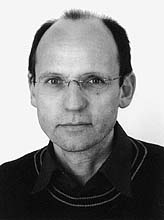
German Cardinal presents new book "On the Trail of Jesus Christ" in Vienna

For German Cardinal Walter Kasper, much of German-language theology has forgotten Christology: "It has become entangled in ecclesiological issues and the question of ordained ministry. But that is far too narrow. It would be important to return to the heart of Christian theology and Christological questions," he said in an interview with Kathpress. He noted that hardly anything new has been published on this topic recently. Certainly, questions concerning the Church are important, but Jesus Christ must be at the center of any Christian response to humanity's longing for hope and meaning, the Cardinal cautioned. Kasper was in Vienna recently for the presentation of his new book, "On the Trail of Jesus Christ," co-authored with the Viennese dogmatic theologian Jan-Heiner Tück.
Theology, he said, must continually reaffirm its roots and sources—and Christology is central to this. "You can't build a theology from scratch. We stand within a great tradition and have a living heritage. This tradition is our treasure, which we must continually draw upon," Kasper stated. "In theology, too, we stand on the shoulders of giants—the Church Fathers, the theologians of the Middle Ages." From a Christological perspective, he expressed a desire for greater awareness of tradition and a renewed drawing upon these sources.
Theology must continually reaffirm its connection to these sources. German theology narrows to structural issues
In Germany, however, he observes a narrowing of theological focus to ecclesiological questions: "The hope is that all the Church's problems can be solved by making it 'more democratic,'" says Kasper, referring to the German "Synodal Path," which he has criticized sharply on several occasions: "I am not against participation in the Church. But it is fundamentally theologically wrong to think that the Church and the necessary renewal of faith can be 'made' in this way."
A strengthening of Christology, on the other hand, is impossible without an immersion in the biblical narrative culture. Only through conscientious Bible reading and empathy with the situations described in the New Testament can one succeed in forging "friendship with Christ." This empathy and friendship with Jesus doesn't simply sweep away the doubts that "are part of any conscious faith"—but it helps one to endure dark times and to bear the darkness of Good Friday and the uncertainty of Holy Saturday.
"Discontinuity within continuity"
In his plea for a renewed focus on Christology, he knows he is in agreement with Pope Leo XIV, who expressed precisely this sentiment in his first address to the cardinals after his election. Kasper goes on to say that he appreciates Leo XIV for his clear language and structured leadership. He is a completely different character and fulfills the office in a very different way than his predecessor, Francis: "And I must say: I am content with this discontinuity within continuity."






.jpeg)

Comments