Urgent call for Pope to restructure Pontifical Commission for the Protection of Minors
"The structure must change"
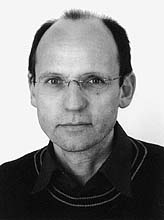
Psychologist Hans Zollner is fighting for the prevention of sexual violence. He is calling for a restructuring of the Pontifical Commission for the Protection of Minors.
Priests wait in St. Peter's Basilica for the arrival of Pope Francis's body. The high number of unreported cases of abuse in the Catholic Church will remain.
taz: Mr. Zollner, did Pope Leo XIV cover up sexual violence by clergy during his time as bishop?
Hans Zollner: According to the documents I have seen, these allegations are not true. Furthermore, four well-known abuse victims from Peru, who are very familiar with the situation, have stated that they have found an important advocate in Prevost. It appears as if these allegations were launched by a right-wing Catholic splinter group founded in Peru and later active worldwide. This group, called Sodalicio, sought to cast doubt on Robert Prevost's credibility even before the conclave. As head of human resources for the bishops in the Vatican, he had contributed to the dissolution of this group, which had numerous cases of abuse. Just a few months ago, shortly before Francis's death.
taz: What do you expect from Pope Leo XIV now regarding the investigation and prevention of sexual violence in the Church?
Zollner: The challenge of this pontificate, in addition to promoting the implementation of preventive measures, will be consistent investigation in a comprehensive sense. From my own experience, I can say that the cultural differences in this regard are very significant. I was already in Australia this year and have just returned from the USA, and will soon be flying to Brazil. In different countries, there are completely different levels of knowledge regarding prevention, as well as completely different levels of perception and sensitivity.
Hans Zollner
Born in 1966 in Regensburg, he is a Jesuit priest and professor of psychology at the Pontifical Gregorian University in Rome. In 2012, he co-founded the Centre for Child Protection in Munich. Zollner advises religious orders and dioceses worldwide on abuse prevention and was a founding member of the Pontifical Commission for the Protection of Minors. He left the commission in protest in 2013.
taz: What exactly does that mean?
Zollner: In India, sexuality and sexual misconduct are not discussed in the same way as in Bolivia or Switzerland. Even the most urgent issues right now are viewed very differently. The Catholic Church is not a monolithic bloc. But the basic principles – protection, safe spaces, safe relationships, and safe processes – must apply everywhere. Therefore, with regard to safeguarding, it will be necessary for this pontificate to take a further step toward clarifying the relationship between the Roman Catholic Church and the universal Church, and thus the question of authority and responsibility. This also requires clarifying the relationship between local churches, for example, those in Germany and churches in Central Africa or Oceania. In particular, this concerns how local churches can work together in the spirit of prevention.
taz: You have met today's Pope several times. What was your impression of him?
Zollner: I experienced him as someone who is very approachable. He is a very normal, simple person who certainly doesn't make a big fuss about himself and who is very matter-of-fact. He has a relatively simple family background, he studied canon law, and he experienced and lived through real poverty, even as a young man in the Peruvian Andes. He is sober, very clear, and thoughtful. And I think that's a very good mix. He brings many qualities that will make the mammoth task he now faces easier.
taz: What can Catholic women and queers expect from him?
Zollner: I believe he will definitely continue what Francis has done in this area. Regarding women, he appointed three women as advisors in the Vatican's Episcopal Ministry – against the resistance of several people in the ministry, which, after all, exclusively decides on men. I also believe that Leo will continue what Francis has demonstrated with regard to homosexual people. That means friendly attention and pastoral closeness. I don't know what he will initiate doctrinally or morally to recognize queer people. I don't know his positions well enough for that.

taz: What do more women with administrative power mean for the prevention of sexual violence in the church?
Zollner: That plays a role in the sense that, of course, interactions are different when there is a gender mix in the church. But in my opinion, more women in the same traditional structure wouldn't change the risk factors. We really need to dig deeper here. We need to look at how control mechanisms work, how supervision works, which training measures are mandatory, and how sustainable accountability must be. This isn't so much about the individuals or their gender, but rather about whether the mechanisms are adhered to and function.
taz: In March 2023, you left the Pontifical Commission for the Protection of Minors, which you co-founded eleven years ago. Why?
Zollner: Over the years, it has become increasingly unclear to me what the actual task of this Commission should be. In other words: what is its goal and purpose? The commission can't really deal with the investigation of cases. There are other bodies for that, within the Vatican or at the regional level. This is a misunderstanding that has prevailed in the public from the very beginning.
taz: What do you see as the Commission's actual task?
Zollner: In my view, what the Commission should do is establish safeguarding measures worldwide and maintain contact with those affected. Over time, many other things emerged that weren't agreed upon, and responsibilities that weren't clarified. And then, the Commission's personnel selection process was opaque. This is exactly what we've criticized elsewhere: that the areas of responsibility are unclear, and thus responsibilities can easily be shifted around. This makes accountability difficult. The final straw for me, however, was that the distribution of funds within the Commission was opaque. I could no longer support that.
taz: What exactly needs to be done in the Commission now?
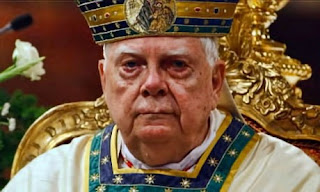
Zollner: I believe that the structure and responsibilities of the Commission must change. To my knowledge, nothing fundamental has happened since then. Cardinal Seán O'Malley is still in office as Commission President, although he was replaced as Archbishop of Boston last year due to age. It's to be expected that something structural and substantive change and clarification will take place.
taz: Also in terms of personnel?
Zollner: Of course.
taz: So Cardinal O'Malley has to go. What about the scandal-ridden bishop of Cologne? Shouldn't the new Pope finally accept Cardinal Rainer Maria Woelki's offer of resignation?
Zollner: It's a matter of transparency and fairness to all involved that a decision is made at all and that we don't constantly operate in a gray area. That gives the impression of a refusal to accept responsibility on all sides. How the decision turns out is up to the Pope.
taz: What is key to preventing sexual violence in the Church?
Zollner: That all people act in a humanly appropriate and Christian manner: to assist those who have been injured or are particularly vulnerable. That all those in positions of responsibility in the Church comply with the norms against abuse, especially those introduced after the international child protection summit in the Vatican in 2019. It's about how a breach of official duties can be punished and how the corresponding process works. This is not just the responsibility of the Pope, but must also begin at the local level. The bishops share responsibility, and the same applies to the superiors of religious orders. We have the regulations, but we don't know how and how often they are applied. We need more transparency and more sustainability.
Cathcon: The stakes are so high for this given the lamentable record of Pope Francis in the Grassi and Zanchetta cases among others. The reputation of the Church in these matters is an enormous barrier to the evangelisation of the peoples.





.jpeg)

Comments