Modernist accuses SSPX of playing at piety, having a limited understanding of tradition and the sin against the Holy Spirit
What follows is pure vitriol, full of odium theologicum
The ordinations of the Society of St. Pius X – The pharisaism of stagnation

The priest who speaks with such malignity is responsible for the mission of the Church in Central and Eastern Europe. He would not say this about any other religious group, least of all the Eastern Rite Catholics and the Orthodox. What is he trying to achieve?
The Society of St. Pius X is once again ordaining bishops against the will of the Pope. For Thomas Schwartz, this is not merely a violation of canon law, but the expression of an internal perversion of the faith.
The bitterest tragedies in church history rarely cloak themselves in the garb of open rebellion. They appear in the vestments of supposedly purest orthodoxy, with hands clasped and eyes downcast. So it is here: The four illicit episcopal ordinations by the Society of St. Pius X are not merely a violation of canon law, nor a regrettable act of disobedience born of zeal in the heat of a liturgical battle. They are the outward symptom of an internal perversion of the faith. It is time to dispel a fundamental delusion.
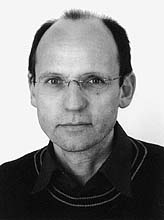
For we will be told that the issue is the Mass and the priests who celebrate it in the proper manner. That it is about the rite, the Latin, and the altar where the priest faces the Lord rather than the congregation. This is the narrative with which the Society has garnered sympathy for fifty years—especially among those who, in their hearts, never loved the Council. Yet it is a smokescreen. At its core, the issue is no longer about Latin or rite. It is about a tangible theological heresy. Thomas Schwartz, Managing Director of Renovabis, at the Vatican.

It consists of a deliberate distortion and radical reduction of the Catholic concept of Tradition—a form of idolatry focused on a calendar page. John Paul II, in his Apostolic Letter Ecclesia Dei adflicta, identified the root of the 1988 schism with surgical precision: an "incomplete and contradictory notion of Tradition." Incomplete, because it denies the living character of the transmission of faith; contradictory, because it opposes the very universal Magisterium to which it claims to be loyal. Anyone who posits that the Church’s dogmatic and spiritual development reached an immutable conclusion in 1962—the eve of the Second Vatican Council—effectively freezes the living Bride of Christ within the pages of a glossy historical magazine and elevates the past to the status of the absolute. One need only read the profession of faith recently published by the Brotherhood in one hundred and fifty-four paragraphs: not a single conciliar document is cited, and no pope since John XXIII is mentioned. This is not a matter of liturgical taste; it is an amputation of Church history.
The sin against the Advocate
This dogma of stagnation is far more than a schism, more than a separation from the Successor of Peter. It is an offense against the Holy Spirit Himself. Christ did not leave His Church a static law book, sealed at some arbitrary point in history; rather, He promised the Advocate, who is to guide her through the ages and lead her into the fullness of truth. Dei Verbum states it with all desirable clarity: under the guidance of the Holy Spirit, apostolic tradition undergoes a process of growth—an increasing understanding of the realities and words handed down, fostered by the contemplation of the faithful and the preaching of those who, in the line of episcopal succession, have received the sure charism of truth. Whoever disputes this opposes not merely a passing trend, but a Council and the very Scripture from which it draws.
In the true Catholic understanding, tradition is not a museum archive. It is the passing on of the fire, not the preservation of the ashes. Traditio means a handing over, a passing from hand to hand, from generation to generation—a flowing stream, not a stagnant reservoir. Newman understood this: living faith unfolds just as a seed grows into a tree, without ever having been a different seed. It is the same stream flowing onward, the same seed sprouting. And—as we have known since at least 1988—there is no fidelity to tradition that severs the bond with the one to whom Christ, in the person of Peter, entrusted the ministry of unity. Whoever denies the Holy Spirit the right to shape and renew the Church in the here and now, and to guide her through an ecumenical council, declares God incapable of acting within history. Such a person halts the stream and mistakes its stagnant water for the living source. They turn the Holy Spirit—the Gift meant to lead us into all truth—into a pensioner who quit his post sometime in the early sixties. This is not holding fast to tradition; it is murdering it with the very knife of its own language.
The masquerade of piety
The most spiritually dangerous aspect of this movement is its masquerade. This heresy does not advance with a raised fist, but with folded hands, downcast eyes, and amidst the thick smoke of censers. It disguises itself as the highest form of piety, humility, and fidelity to ancestral tradition. Under the pretext of saving the "true faith" from decay, it establishes an elitist circle of self-justification. And at its core lies not love, but paranoid fear—the fear that the living Church is a traitor, every council a conspiracy, and every pope for the past six decades an impostor on the Chair of Peter.
It is a familiar, biblical dynamic: self-righteous Pharisaism in its purest form. One washes the outside of the cup and pays meticulous attention to every liturgical iota, yet inwardly one rejects the heart of the Gospel—unity and openness to the Spirit, who blows where He wills. This performance of humility—which is actually rooted in profound pride vis-à-vis the ordinary Magisterium—is a subtle perversion. Obedience that dictates its own terms is no longer obedience. It is arrogance wearing a cassock. One presents the dossiers of candidates to the Pope, professes no desire to establish a parallel authority, and appeals for charity—only to proceed with ordinations anyway, defying his express word and his threefold command: "Do not do this." For the actual act of disobedience—whether in 1988 or in 2026—entails, as John Paul II termed it, a genuine rejection of the Roman primacy; and whoever rejects the primacy rejects the One who instituted it. The fact that the sacrament of apostolic succession is once again being misused in the act of illicit ordinations reveals the utter obstinacy of this path. It is reprehensible and repugnant to employ sacramental grace as an instrument of separation. For the office of bishop is the point at which apostolic succession is sacramentally transmitted—and it is precisely this bond of unity that is being severed here, using the very instrument intended to forge it. Whoever seeks to shackle the Spirit of God to the confines of a single era has ceased to be Catholic. The letter kills, but the Spirit gives life: they chose the letter of 1962 and passed it off as the Spirit. In doing so, they have constructed a private, surrogate church of their own—flawless in form, yet empty in spirit. And they stand before it like the rich fool before his well-stocked barns: proud of a treasure that the moths of history have long since devoured.





.jpeg)

Comments