Modernist accuses SSPX of having the wrong idea of tradition
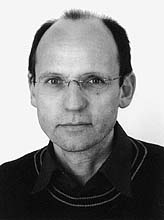
All attempts at dialogue have failed: The Society of St. Pius X is heading toward schism. In an interview with katholisch.de, Viennese dogmatic theologian Jan-Heiner Tück explains the roots of the dispute surrounding the Second Vatican Council.

Click on the link on the left to see other statements from Professor Tück. They form a modernist pattern
The announced illicit episcopal ordinations by the Society of St. Pius X mark a new stage of escalation in the conflict between the community and Rome. To understand the conflict, one must know its background. It involves far more than just the question of the correct form of liturgy; theologically, fundamental issues are at stake, explains Viennese dogmatic theologian Jan-Heiner Tück in an interview with katholisch.de: specifically, the acceptance of the Second Vatican Council and its openness to the world, to other Christian communities, and to non-Christian religions.
Question: Professor Tück, what immediately stands out about the Society of St. Pius X is its celebration of the pre-conciliar liturgy. But is that the core of the dispute?
Tück: The core of the dispute is not the liturgy itself, but the reforms of the Second Vatican Council. The Society of St. Pius X displays a stubborn refusal to accept them, as evidenced most recently by its "Declaration of Faith." Lefebvre had initially even welcomed the Constitution on the Sacred Liturgy; his criticism was directed at the implementation of the liturgical reform. He sharply criticized what he perceived as a weakening of the sacrificial character of the Eucharist and the change in the direction of celebration. Lefebvre spoke of the "introduction of the Luther Mass." That is, of course, a polemical distortion of the true aim of the liturgical reform.
Question: Yet Marcel Lefebvre himself—the founder of the Society of St. Pius X—initially sought to remain in accord with Pope Paul VI after the Council.
Tück: Yes, he signed all the Council documents in order to remain in agreement with the Pope. The correspondence between Paul VI and Lefebvre is interesting. Even back then, the Pope accused Lefebvre of presuming to be the guardian of Tradition—a role that belonged to the Pope himself. Paul VI clearly analyzed that Lefebvre advocated a virtually frozen concept of Tradition, recognizing only one segment of it, whereas the Council had returned to the sources—Scripture, liturgy, the Church Fathers, and scholastic theology—to bring about renewal. None of this convinced Lefebvre. To me, this seems to be a key to interpreting the conflict today: Lefebvre—and the Society of St. Pius X along with him—narrowly confines Tradition to the era spanning Gregory XVI and Pius XII, that is, from the 1830s to the 1950s. Anything existing before or after that which belongs to the Church’s integral Tradition is disregarded. Hans Urs von Balthasar once sharply remarked that integralism violates integral Tradition by severing the link to the present in the name of the past, thereby discrediting itself.
Question: The alleged Protestantization of the Church by the Council is one major line of criticism. The other is the accusation that the ideals of the French Revolution entered the Church through the Council. Why is the French Revolution so central to Lefebvre’s critique?
Tück: Here, one must first consider Lefebvre’s French context: during his childhood, youth, and studies, French *laïcité* (secularism) served as the foil against which true Catholicism was defined. The strict separation of church and state—which was pushed to the extreme, even fostering forms of anticlerical and anti-church sentiment—was precisely what he sought to combat. Unlike the situation in our own country, French Catholicism remains acutely aware of the persecution and killing of priests and other believers during the Revolutionary era. One must take these traumas within the collective memory of certain segments of French Catholicism into account to properly contextualize his criticism. Lefebvre felt that the agenda of the French Revolution had infiltrated the Council chamber like a Trojan horse. He saw the Church’s hierarchical structure—with the Pope at its head—being undermined by the guiding principles of liberty, equality, and fraternity. This is the central theme of his critique, and each of the three slogans can be linked to specific reform objectives.
Question: At first glance, the parallel seems plausible: the recognition of religious freedom corresponds to liberty; episcopal collegiality and the common priesthood of all the faithful to equality; and ecumenical and interreligious openness to fraternity. Did these French ideals actually guide the Council’s actions?
Tück: No; the Council’s reforms were paved by movements for church renewal that had been active since the beginning of the 20th century. What Lefebvre criticized as a "revolutionary act" was something else entirely. Right at the first general assembly, Cardinals Josef Frings and Achille Liénart intervened, insisting that the Council fathers themselves should decide who would serve on which commission. In doing so, the bishops became active participants in the Council rather than simply rubber-stamping the draft documents prepared by the preparatory commission. Framing the Council documents—developed over four sessions between 1962 and 1965—in terms of the French Revolution’s mottoes was a retrospective interpretation. Lefebvre was a master of the rhetoric of contrast; he was exceptionally skilled at distilling his criticism into striking, catchy slogans.
Question: Lefebvre criticizes the fact that the Council fathers took it upon themselves to steer the Council. At the same time, he is himself a bishop who insists on his own insight and understanding, thereby taking it upon himself to correct the Pope and the Church. How can this self-contradiction be explained?
Tück: There are a number of self-contradictions in Lefebvre’s writings and actions. On the one hand, he wants to see papal authority protected against the concept of episcopal collegiality. On the other, he himself undermines that very authority by taking it upon himself, as a bishop, to ordain other bishops against the Pope's will. St. Pope Pius X—to whom the Society of St. Pius X appeals—once said: "He who is holy cannot be at odds with the Pope." This plays no role for Lefebvre. In an act of disobedience, he damaged papal authority, drove a wedge into the community of bishops, and fostered the devastating impression that there are now two forms of Catholicism—the pre-conciliar and the post-conciliar—as if the Church’s past and present were not interconnected. Within the Society of St. Pius X, the prevailing narrative is that "neo-modernist" Rome has turned away from "eternal Rome," and that this can only be rectified if the Rome of today makes a pilgrimage to Écone and does penance for its modernist watering-down of the faith.
Question: Most recently, the Prefect of the Dicastery for the Doctrine of the Faith, Cardinal Víctor Manuel Fernández, initiated an attempt at dialogue. Following a conversation with the Superior General of the Society of St. Pius X, there was talk that Rome might be open to a dialogue regarding varying degrees of assent to different documents of the Council. The Society of St. Pius X quickly rejected this offer. What might such a dialogue have looked like? Is it even possible to accept the Council with a graduated level of binding authority?
Tück: I personally hold the view that this is not feasible: anyone who calls into question the Council’s declarations and decrees is simultaneously questioning the foundations of those documents—namely, the dogmatic constitutions. Conversely, one must of course first formally acknowledge that the Council itself established a hierarchy among the various types of documents it produced, distinguishing between constitutions, decrees, and declarations. Yet, all the openings found in the decrees and declarations—and so vehemently rejected by the Society of St. Pius X (such as religious freedom, ecumenism, and the relationship with Judaism)—are grounded in the dogmatic constitutions. The proposal made by the Prefect of the Doctrine of the Faith is therefore somewhat questionable, as it ignores the Council’s historical impact over the past sixty years. Ecumenical outreach, Jewish-Christian dialogue, the recognition of religious freedom and freedom of conscience—and thus the affirmation of the liberal constitutional state—are indispensable to the Church. Anyone who challenges these achievements now risks provoking a massive outcry, and not just within the secular public. On this point, I fully agree with Cardinal Gerhard Ludwig Müller, who—even during his time as Prefect of the Congregation for the Doctrine of the Faith—was crystal clear: there can be no reconciliation without unequivocal acceptance of the Second Vatican Council. The outstanding issues can only be resolved through an understanding regarding ecumenical outreach, the relationship with Judaism, and religious freedom and freedom of conscience—yet the Society of St. Pius X dismisses any resolution of these doctrinal differences as "impossible." I found this quite astonishing, given that Fernández had gone further than his predecessors in accommodating the Society, only to have his offer immediately rejected.
Question: Did the members of the Society of Saint Pius X perhaps realize that they derive their significant success primarily from their status as rebels, and that without this rebel status, there would be no basis left for their continued existence?
Tück: In any case, the Society of Saint Pius X would no longer be the Society of Saint Pius X if it were to return to the fold of the Catholic Church.
Question: Following the failure of the attempt at dialogue, the strategy seems to be to lay out the consequences: if the ordinations go ahead, the schism will be complete—entailing all the consequences prescribed by canon law. Excommunication would follow.
Tück: It was right for Cardinal Fernández to reiterate, in a formal warning (*monitum*), what happens when episcopal ordinations are conferred without an apostolic mandate. Through this act of disobedience against the Pope, the participants—both the ordaining bishops and the recipients—automatically incur excommunication. The Roman Magisterium will designate this as a "schismatic act." This is consistent with the stance of Pope John Paul II, who in 1988 just as promptly labeled the ordinations performed by Lefebvre at that time as a schismatic act. This continuity and clarity are important because there are voices within the Church that view the Society of Saint Pius X favorably. Consider Auxiliary Bishop Athanasius Schneider, who recommended to the Pope that the ordinations be permitted without any conditions. His reasoning: The Society of St. Pius X are guardians of Catholic truth—a truth that, in the interest of correcting post-conciliar developments, ought to be constructively introduced into the Church's internal debates.
Question: Does that argument hold water?
Tück: No, it is not merely a matter of potential adverse developments, but of fundamental questions. Unconditional recognition of the Society of St. Pius X would lead to a contradictory theology. One cannot simultaneously claim—on the one hand—that the Jews have lost all significance in the history of salvation and remain complicit in deicide to this day, while—on the other—affirming, in line with *Nostra Aetate* and Pope John Paul II, that they are rooted in a bond with us as the Church and stand within an unbroken covenant. One cannot argue, on one side, for a Catholic state à la Franco or Pinochet to enforce the truth through state power, while on the other, acknowledging the liberal legal culture and utilizing the opportunities to bear witness to the faith afforded by the secular state. One cannot label non-Catholics as "schismatics" and "heretics" while simultaneously engaging with them on equal footing as separated brothers and sisters. It is therefore only logical that illicit ordinations—should they occur—will result in a clear situation.
Question: But with the consequence that the long-simmering schism is clearly identified, rather than being politely glossed over as it has been until now.
Tück: A schism need not necessarily remain a schism. Realistically speaking, the Society of St. Pius X’s stubborn refusal to accept the Council is unlikely to change. Yet there remains the hope that those members of the Society who are unwilling to follow this path into schism might find their way back into full communion with the Church—perhaps by joining the Priestly Fraternity of St. Peter. After all, the Fraternity of St. Peter was founded in 1988 by those who refused to follow Lefebvre into schism. Of course, such a migration may not be very likely, given the long-standing conditioning of most members of the Society of St. Pius X. Let us wait and see. Depiction of a session of the First Vatican Council
Question: You see a risk of a parallel church emerging here, too: The Old Catholic Church formed after the First Vatican Council. However, the Old Catholics broke away precisely because of the papal dogmas and are able to function perfectly well as a church without a pope today. The Society of St. Pius X, on the other hand, has no problem with Vatican I; it needs the Pope and looks to him. How, then, can a parallel church emerge?
Tück: The formal point of comparison in both cases is the appeal to tradition. After Vatican I, the figures who would go on to form the Old Catholic Church rejected the papal dogmas in the name of established doctrinal traditions. That led to the schism. Similarly, the Society of St. Pius X rejects the Second Vatican Council and post-conciliar developments in the name of "tradition." A certain contradiction is evident among the members of the Society: they wish to remain in communion with the Pope while simultaneously rebelling against him. You are familiar with the phrase: "*Ubi Petrus, ibi ecclesia*"—where Peter is, there is the Church. That is why they mention the Pope's name in the Eucharistic Prayer; indeed, they explicitly asked for permission to ordain bishops. This shows that they wish to remain in unity with the successor of Peter. Yet, at the same time, in an act of emancipation, they disregard the lack of an apostolic mandate because they believe the Pope is acting in contradiction to "Eternal Rome." They would follow the Pope if he thought exactly as they do. That is the hubris of traditionalism. From my perspective, there is now a danger that the Society of St. Pius X will establish a parallel church with its own episcopal structure, effectively breaking away from Rome.
Question: Is there still hope, despite everything? What kind of scenario would lead to reconciliation?
Tück: A reconciliation scenario has already been played out once before: Pope Benedict XVI had hoped to bring about a return to full communion through the literal translation of the words over the chalice—rendering *pro multis* as "for many"—by authorizing the celebration of the pre-conciliar liturgy via the *motu proprio* "Summorum Pontificum," and by lifting the excommunication of the four bishops of the Society of St. Pius X. He had hoped that this generous offer would also pave the way for resolving doctrinal differences. He wanted to show the members of the Society that tradition cannot be frozen in time. A concept of tradition that insists on immutability distorts the very nature of tradition. Even a dogma such as "no salvation outside the Church" underwent modifications by the Magisterium—opening it up to broader interpretations—long before the Second Vatican Council; one must recognize and acknowledge these changes to be able to endorse the Council’s ongoing development. Conversely, the post-conciliar debate saw reformist avant-gardists who overshot the mark, going beyond the letter of the Council’s texts by appealing to its "spirit." Traditionalists often cite these positions—which the Magisterium itself repeatedly sought to contain—as the reason for their rejection of the Council. Returning to unity requires a prolonged process of dialogue—one that demands a willingness on the part of traditionalists to move away from their uncompromising rejection of reform. Lefebvre’s polemics against "bastard priests" celebrating "bastard masses" and administering "bastard sacraments" make dialogue extremely difficult. A "verbal disarmament" is needed first if any progress is to be made. Realistically speaking, July 1st will likely bring another flare-up of conflict. Will there be another chance for clarification after that? We shall see. One cannot anticipate the Holy Spirit, whom Cardinal Schönborn once called the "Master of the Impossible."
Catholic Conclave: Modernist accuses @SSPXEN of having the wrong idea of tradition #CatholicX https://t.co/Am1PiCtVhI pic.twitter.com/WQEemotadM
— Catholic Conclave (@cathconclave) June 29, 2026





.jpeg)

Comments