Cardinal Roche accused of "pre-conciliar" theological thinking. German modernists determined to ignore Rome and continue their destruction of the priesthood
Theologian Bauer on the preaching ban: It would have been better not to ask Rome
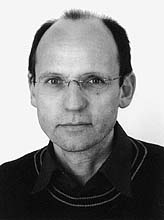
Christian Bauer, born in Würzburg in 1973, has been Professor of Pastoral Theology at the Faculty of Catholic Theology at the University of Münster since 2023. Prior to that, he served as Professor of Pastoral Theology at the University of Innsbruck in Austria starting in 2012.

Professor Bauer, what was your initial reaction to the Vatican’s ban on lay preaching during the Eucharistic celebration?
I was disappointed. For I, too, had harbored the—ultimately naive—hope that the will for a synodal transformation of the Church was significantly stronger in Rome. In that respect, the document from the Vatican was a rude awakening. It was not a good day for overcoming the stubborn, deeply ingrained clericalism—practiced for centuries—of a Church that is adopting a synodal approach only very hesitantly.
How sound is the reasoning provided by Cardinal Arthur Roche, Prefect of the Dicastery for Divine Worship and the Discipline of the Sacraments?
It is certainly coherent within the framework of a specific—ultimately pre-conciliar—theology, even though that theology can still invoke the Second Vatican Council. However, drawing on the Council, entirely different arguments could also be made. We compiled the most important of these a few years ago in a book intended as a kind of "contribution" from various theological disciplines to the Synodal Path.
In my personal view, the German inquiry was not much more sound than the Roman response. For here, the discussion concerns "laypeople" in very general terms—individuals for whom permission to preach (an "indult") is sought based on the current pastoral emergency, citing the official Roman authorizations granted between 1974 and 1983. The aim was to preserve the status quo established under Joseph Ratzinger when the 1983 Code of Canon Law came into effect; this would have been merely a localized exception to the rule that remained in force.
What, then, would constitute a more convincing justification?
From my perspective, a far more compelling argument for preaching by "laypeople"—in the sense of an official interpretation of Scripture (a "homily") during Sunday Mass—lies in the fact that these preachers do indeed hold an official role. This point is more significant, for instance, than the link between the roles of presider and preacher mentioned in the Vatican document—a link that is absent even when a deacon or an assistant priest delivers the sermon. This is crucial from the perspective of the theology of ministry; according to the Roman document, the homily is "not merely a matter of theological competence" or pastoral expertise, but an act performed in an official capacity.
Parish and pastoral associates who preach are more than just paid volunteers. They are non-ordained church office-holders sent by the bishop, as defined in Canon 145 §1 of the Code of Canon Law. Consequently, they do not preach in a private capacity or on their own behalf, but officially in the name of the Church. The wonderful Augustinian formula regarding ministry applies to them as well: "With you I am a Christian; for you I am... a preacher." The distinction that is decisive for the theology of ministry is not between clergy and laity, but between the People of God ("with you, a Christian") and preaching office-holders ("for you, a preacher"). Since this line of reasoning regarding the theology of ministry did not appear in the German document, the Roman response logically did not address it either, speaking instead only of "lay faithful." There is no mention of office-holders who are not ordained but are officially commissioned. The text merely states that the homily is "inseparably" linked to an ecclesial mandate that "finds sacramental expression through Holy Orders." Given this clear stipulation, however, one unfortunately cannot ask whether the prohibition expressed here actually applies to the situation in question.
Is it sufficient that, as Cardinal Roche writes, current church practice already provides a "wide range of possibilities" for the laity regarding the proclamation of the Word?
It is certainly true that the creative life-force of the Gospel can be witnessed to in very different ways, both in word and deed. However, the Roman argument amounts to a rather cheap theological stalling tactic—a form of essentially clericalist "whataboutism" that runs along these lines: "So, you would like to preach? How about children’s services and Liturgies of the Word instead?" It is akin to the wearing of liturgical vestments during worship. That, too, is not about the clericalization of the laity, but rather about the *de-clericalization* of ecclesiastical office—a shift that becomes visible and tangible to everyone within the symbolically charged, public ritual life of the Church.
What is generally needed is to move beyond the traditional clergy-laity dichotomy toward a diversity of ministries and offices—much like in the early days of Christianity—which would naturally manifest in a variety of people taking on the role of preacher. On the forward-looking path back to this diversity, the classic ecclesiastical career ladder (*cursus honorum*)—which gradually emerged after the Constantinian shift—would need to be tilted from its vertical structure toward a horizontal plurality of offices; a "post-Constantinian" model that is once again more closely aligned with Christian origins.
What impact will the Vatican ban have on Germany and local congregations?
I hope—none that is felt in everyday life. For I hope that this Roman intervention will be handled in many communities just as the 1988 ban on preaching was: listening to Rome, yet—while maintaining an unbroken bond with the universal Church—choosing a different path for good reasons and trusting in the creative Spirit within God’s plan of salvation. However, the Roman decision is truly bitter for those dioceses and communities where this option is unavailable due to the stance of the local bishop or parish priest.
Sunday after Sunday, they will hear only the same voice interpreting the Gospel—unless a deacon or curate is preaching—and it certainly will not be a female voice. Yet the issue of gender justice is of central importance to the credibility of the official proclamation of the Gospel. For a Church that consistently contradicts its own message through its actions—its "body language" (Hermann Glettler)—is already "preaching" before an ordained minister even opens their mouth. Perhaps, in this light, it would have been wiser not to ask Rome in the first place, so as to avoid receiving such an answer?
What opportunities might lay preaching offer during the Eucharistic celebration?
Since my early youth, I have heard excellent sermons in my home parish delivered by pastoral associates—sermons that shaped me spiritually and whose content I can, in part, still recall vividly. Today, I am not only a lay member of the Dominican "Order of Preachers" but also, as a professor of homiletics, responsible for the theological training of preachers. In this context, we seek—together with the students—to creatively weave the many small stories of our everyday lives into the great narratives of the Christian faith.
Homiletics is one of my favorite disciplines within practical theology because, regarding the inculturation of the Gospel, it poses a fundamental pastoral question: Do we speak the language of the present? Like the "Reader" in Cornelia Funke’s *Inkheart* trilogy, the task is to articulate the Gospel today in such a way that we ourselves can play a role in it. Preaching is about people in Jesus’s orbit lifting their heads and breathing freely; it is about them rising above their limitations, learning to walk tall, and finding their way to themselves and to one another—and about their lives taking a turn for the better.
In this regard, it is of secondary importance whether or not the preacher is ordained. What truly matters, in the spirit of Jesus, is that the sermon serves this pastoral goal. Everything else—including matters of church discipline—must be subordinate to it. After all, the primary aim of preaching is the dawning of the Kingdom of God, not the stabilization of rule by men or the clergy: "Seek first the kingdom of God and his righteousness, and all these things will be added to you" (Matthew 6:33).





.jpeg)

Comments