Jesuit lays siege to the Papal office. Synod and female ordination as solvents of Catholicism.
Jesuit laments "monarchical leadership" of the Catholic Church
"Is the current constitution truly God's will?"

While women make up half the members of the Catholic Church, their involvement in its leadership has been minimal, criticizes Jesuit Stefan Kiechle. He calls for greater freedom for local bodies that dare to take new steps.
Jesuit Stefan Kiechle urges greater participation of women in the leadership of the Catholic Church. "Women make up the (larger) half of church members, yet their involvement in leadership—not only in administration but also in shaping the content of church life—has been very limited," writes Kiechle in the journal "Stimmen der Zeit" (June).
The former head of the German Province of the Jesuit Order adds: "The fact that women are given middle management positions in diocesan offices and the Vatican in individual cases does not solve the problem, because the higher clergy still hold positions above them." Many women, "especially educated ones," are frustrated and withdraw into their social circles or leave the Church altogether.
"The final word always rests with the clergy."
Leadership in the Catholic Church has been "monarchical" so far, laments Kiechle: "A parish priest has the final say in the parish. A bishop decides whether or not to implement in his diocese what is decided in the Bishops' Conference or in a possibly synodally constituted body."
"According to the classical doctrine of the three branches of government, the legislative, judicial, and executive branches are one and the same."
And finally, a Pope decides for the universal Church. "He appoints decision-makers; he establishes law, adjudicates disputes, and applies the law at his discretion—according to the classical doctrine of the three branches of government, the legislative, judicial, and executive branches are one and the same." Such a constitution is defined in political science as an absolute monarchy—"the Holy See is the last of its kind in Europe," says the Jesuit.
"This is hardly the work of the Holy Spirit."
One might ask: "Is the current constitution truly God's will?" Kiechle emphasizes: "What is not, or no longer, comprehensible to broad sections of the Church is hardly likely to be the work of the Holy Spirit and should not be done." The two most pressing questions for "contemporary leadership" of the Church are those of participation and that of women.
"How can the monarchical principle be broken down so that more people participate in leadership?" asks Kiechle. Changes don't require a global decision. "No, progress could be made decentrally, with Rome granting bishops' conferences or—better yet—local synodal bodies the freedom to take the first steps," Kiechle suggests.
Model religious orders: female leaders
For religious orders, the following already applies: "Women's orders are led—hopefully without overarching male interference—by women, men's orders by men." The frustration experienced by women so far is therefore "more readily found within the diocesan structure and the global Church," according to Kiechle.
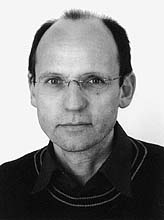
The priest has been editor-in-chief of the Jesuit journal "Stimmen der Zeit" (Voices of the Times), published by Herder, since 2018. Prior to that, he led the German Province of the Jesuit order for seven years.





.jpeg)

Comments