Theologian justifies his distaste for the Latin Mass in entirely political terms. Needs to find something to hate and then hates it!
Gregory Solari: The liturgy is always 'political'
In the disputes surrounding the celebration of the Tridentine Mass before the Second Vatican Council, the issue at stake is indeed the vision of the Church, notes Gregory Solari. For the theologian, the liturgy can be understood as a mirror of a culture or a society. Paying attention to political co-optations, in Europe as well as in the United States, is essential.

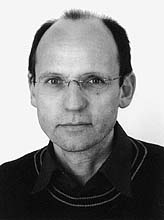
Theologian Gregory Solari is very familiar with traditionalist circles
You explain that the Mass or the liturgy is a mirror of a Church or a society.
The bodily and symbolic attitude of the congregation gathered in the nave is never neutral. It reflects a certain way of inhabiting the world, of conceiving authority, participation, and responsibility. In this sense, the liturgy is always already political: it shapes ways of being together, stages a vision of the city, and silently educates bodies and minds in a certain regime of relationships.
It is in this sense that the liturgy can be understood as the mirror of a culture or a society. Its structure reflects that of the social body, which it expresses in symbolic and ritual form. It is the awareness of this connection that constitutes the ecclesiological and sociological horizon of Pope Francis's theology of the liturgy.
"The Tridentine Rite, through its structure, its orientation, and the rigorous distribution of roles, unfolds a worldview ordered around a central, hierarchical, and sacralized power."
Wasn't his primary concern for ecclesial communion?
Yes, but not only that. A political appropriation of the liturgy is always possible. In my view, in retrospect, there is something prophetic in what Pope Francis saw.
The central issue of the liturgical reform stemming from Vatican II is the participation of the faithful. Can this be seen as a preferential option for democracy?
The major principle that has guided the liturgical reform rests on the priesthood of the baptized, expressed in the active participation of all in the liturgy and the life of the Church. It is about moving from a passive attitude to one that recognizes the exercise of this baptismal priesthood and the sense of faith of the faithful, both within the context of the celebration and beyond. This is what is being implemented today in synodality. In this sense, yes, we can say that the ongoing synodal reform means that the Church is bearing witness to the personal freedom and responsibility upon which democracy is founded.
If the attitude of the congregation in the nave is never neutral, should we conclude that a liturgical rite can promote a political vision?
In light of the theology of Vatican II, the Tridentine Rite, through its structure, orientation, and rigorous distribution of roles, unfolds a worldview ordered around a central, hierarchical, and sacralized power. The people are present, but primarily as spectators. Participation exists, but it remains indirect, mediated, essentially visual and devotional.
The liturgical reform stemming from Vatican II proposes a different political anthropology. By giving voice back to the congregation and making active participation a norm, it affirms that the liturgy is everyone's business and that each person bears a real responsibility within it. This can be seen as the crucible of the synodal ethos. The congregation no longer perceives itself as a passive people governed from the sanctuary; She becomes aware, without blurring the lines between pastors and the faithful, that the entire community is a subject of celebration, an actor in the rite, and co-responsible for what takes place within it. This cannot fail to have an effect on our perceptions and our "political" commitments.
"Every worldview shaped by a culture is reflected in a certain vision of the Church."
How can we avoid the risk of instrumentalizing the liturgy for the benefit of an ecclesiological or political vision?
It is important not to confuse genuine participation with activism. We participate in the liturgy primarily to fully live out our baptism. The liturgy is a theological moment before it is a political one. We must be keenly aware of this difference and, at the same time, not naively ignore that the question of a liturgy that sometimes emphasizes the exclusive role of the ordained minister and sometimes the inclusive participation of all the faithful, men and women, raises the issue of the impact of a rite on the attitudes and postures of each individual. And therefore, also on our relationship with society, its organization, and so on. Conversely, we must not ignore the effect of the perceptions we bring with us when we cross the threshold of our places of worship. The world is not separate from the church. The boundary between the two lies within us. It is the baptismal ethos that makes the difference.
We finally arrive at the vision of the Church and its presence in the world.
Yes, fundamentally, it is a question of ecclesiology, and therefore also a political question. From its very foundation, the Church is situated in the world, and those who comprise it bring their representations, their ways of being, their culture, which necessarily influence how it understands and organizes itself. Every worldview shaped by a culture is reflected in a certain vision of the Church, itself expressed and structured by the liturgy. The liturgy can therefore appear either as a mirror of contemporary society or as a stance that resists and questions it.
The argument of "Tradition of all time" is often invoked to criticize a liturgy that reflects the contemporary world.
This is an unfounded argument. Because tradition is not a body of documents but a living act of transmission. It is the very life of the Church, which, in its Magisterium, ceaselessly transmits the Word of God upon which it is founded. This is the fundamental correction made by Vatican II in Dei Verbum. One cannot freeze a moment in the Church's history and erect it as a norm: tradition is precisely the movement that gives it life and growth. This is what John Henry Newman, whom Leo XIV declared a Doctor of the Church in November 2025, so clearly understood: the Church is always evolving, like a living organism.
Or else one contrasts the traditional character of the Council of Trent in the 16th century with the modernity of Vatican II.
Faced with the Reformation movement, the Council of Trent acted more in haste than with a view to genuine refounding or reform. Lacking sufficient time and documentary evidence to return to the patristic sources as it had envisioned, the council was unable to restore the Roman Mass. He simply established, with almost mathematical precision, the Tridentine norm for celebration in the ritus servandus. It is important to recognize the eminently modern nature of such a measure: the Tridentine missal contains a "software" that makes the rite function. This makes the ritus servandus a kind of "discourse on method" before its time.
The very "traditional" Tridentine missal anticipates the Cartesian revolution, the paradigm of modernity. In reality, it is the Roman missal reformed by Vatican II that bears witness to liturgical tradition. The council accomplished the work that Trent had been unable to complete: rediscovering, behind the layers inherited particularly from the Carolingian era, the older forms of the Roman rite. These were the forms that had accentuated the "monarchical" dimension of the Roman liturgy prior to the council.
“One doesn’t fall madly in love with democracy by attending Paul VI’s Mass, nor with the monarchy by attending the Tridentine Mass.”
You speak in this regard of a “Carolingian temptation” today, particularly in the United States, surrounding the renewed interest in the Tridentine rite.
The connection between this temptation and the interest in the Tridentine rite is not merely an aesthetic analogy. On the one hand, we have a questioning of democracy stemming from the Enlightenment, and on the other, the vision of politics conveyed by the Tridentine liturgical imagery. Through its pyramidal distribution of roles and the invisibility of the congregation as an active agent, the ancient order provides an imagery consistent with this critique of democracy.
The “Carolingian temptation” here refers to a possible political instrumentalization of the Tridentine Rite, analogous to what Charlemagne undertook when he imposed the Roman liturgy to unify the Holy Roman Empire. In some respects, this phenomenon is similar to the Action Française movement of the 20th century, where religion was used as a political tool. It is worth remembering that Action Française was condemned by Pope Pius XI in 1926 as a form of “pagan nationalism.” But it was later rehabilitated by Pius XII…
The question of the Tridentine Rite is therefore not limited to a matter of liturgical sensitivity
Nor to the question of tradition. This shift also corresponds in part to a way of thinking marked by the rejection of the Enlightenment and, further back, the Protestant Reformation. Pope Francis’s pontificate can be seen as an attempt to clarify these confusions.
Let us disregard his abrupt manner. Behind Traditionis Custodes lies the concern to rearticulate, beyond liturgical practices, the profound link between ritual form and political vision. Furthermore, one can have a genuine Christian-social bent and still cherish the Tridentine Rite. This was the case with Benedict XVI, to whom we owe Summorum Pontificum. Yet Joseph Ratzinger never questioned the legacy of the Enlightenment, as evidenced by his dialogue with Jürgen Habermas. This demonstrates that the question of the Tridentine liturgy cannot be confined to a mere ritual debate.
How can a rite correct a political vision?
All oversimplification must be avoided. For example, one cannot mechanically oppose the political imagination reflected or generated by the Tridentine Rite to the personal freedom and responsibility stemming from the Enlightenment. Let us remember that this was the rite celebrated during the French Revolution, and not only by the Chouans of the Vendée. One does not become madly in love with democracy by participating in the Mass of Paul VI, nor madly in love with the monarchy by attending the Tridentine Mass. There is no automatic causality. What the liturgy shows us, as in a mirror, is first and foremost what is in our hearts. Rather than our political ideas, our worldviews, our representations of the Church, it is the face of the Risen Christ, victorious over the yoke of Roman imperial rule—over all political, economic, and other forms of oppression—that we must proclaim. The entire theology of the liturgy of Pope Francis rests on this requirement—particularly Desiderio desideravi—including its most severe aspects regarding any form of ideological instrumentalization of the liturgy. One does not trifle with the Mystery of Faith.
All this argument leads to is yet another round of scapegoating and stereotyping traditionalists.





.jpeg)

Comments