Modernist co-option of Saint John Henry Cardinal Newman continues apace


His interview
Pope Leo XIV has decided: John Henry Newman should be declared a Doctor of the Church. In an interview with katholisch.de, Newman expert Roman Siebenrock explains what is groundbreaking about his theology, how his impact connects people—and what the Church can learn from him today.
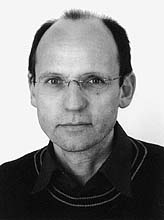
Convert, cardinal, saint—and soon Doctor of the Church: Pope Leo XIV recently announced his intention to confer this title on John Henry Newman (1801-1890). Newman was initially a priest in the Anglican Church and converted to the Catholic Church in 1845. He is considered one of the most important theologians of the 19th century and paved the way for theology into the modern era. One person who has intensively studied Newman's theology and its impact is Roman Siebenrock. The retired dogmatician from Innsbruck is chairman of the International German Newman Society. In the interview, he puts Newman's appointment as a Doctor of the Church into context – and explains how he can bring people of different viewpoints together in the Church.
Question: Mr. Siebenrock, how long did you long for the decision to proclaim John Henry Newman a Doctor of the Church?
Siebenrock: That Newman has been of great importance in German reception since the 1920s is clear. In my opinion, titles are always somewhat ambivalent. He deserved it, but I personally didn't long for it. What's more important is that people continue on his journey.
Question: What do you mean by that?
Siebenrock: Newman says that faith is a personal matter and will become increasingly so. He places great value on the formation of conscience and on personal existential relationships. That is, Newman can be a companion, living one's own life, as he says, before God and also inventing it to some extent, because human beings are "self-made" when it comes to shaping their lives. In this respect, Newman can be a good facilitator or advisor in finding one's own path before God.
Question: You once described Newman as a "troublemaker." What makes him such a person?
Siebenrock: That's a sober assessment of his effectiveness. When he became a Catholic, he first tried to find his way into this "system." I'm convinced he didn't quite understand the reality of the Catholic Church at that time. By joining the Roman Catholic Church, he emphasized the importance of doctrinal development. This brought him accusations of heresy from America shortly after his conversion in 1846. In 1859, he formulated an idea he had already had as an Anglican: It was extremely useful to consult lay people about church doctrine. This, too, brought him accusations of heresy.
This also becomes clear in his discussion of the First Vatican Council, where he advocates a minimalist interpretation, which I also adhere to. Despite all his supposed codification, he demanded that the Catholic Church stay on its path. It is not yet, as many believed, perfected. He says, we always move from shadows and images into truth. Newman calls theology the "prophetical office in the Church." This should be both admonishing and encouraging.
Question: What, in your view, is groundbreaking about his theology?
Siebenrock: The unity of theological reflection and the existential path of life. He speaks of how we must become "real," as not just talking about God conceptually, but needing a vision that truly permeates the life of the individual. This means that theology should be biographically oriented, based on one's own experience. I've already mentioned the theory of development. The Church is always on the way, and sometimes it goes astray, into aporia. The Christian idea is too big to be simply packaged. We don't control it; we bear witness to it. He was firmly convinced that there is an intimate relationship between the individual and God. And here the Church, with all its sacraments, offers help, but it is not the middle ground: There is a "principle of reserve." I think Newman would have something to say about so-called spiritual abuse here.
Question: His teaching on conscience is crucial.
Siebenrock: He emphasizes the priority of conscience over any authority. He says: If the king or the pope demanded absolute obedience from me, I would give it to neither, because that would exceed the bounds of morality. This also means that each individual is personally responsible to both secular and spiritual authority. This is summarized in his famous toast, which is also included in the Catechism: First conscience, then the Pope.
Outrageous cartoon of what Newman actually said and he knows it. The following a quote from Newman
So much for philosophers; now let us see what is the notion of conscience in this day in the popular mind. There, no more than in the intellectual world, does "conscience" retain the old, true, Catholic meaning of the word. There too the idea, the presence of a Moral Governor is far away from the use of it, frequent and emphatic as that use of it is. When men advocate the rights of conscience, they in no sense mean the rights of the Creator, nor the duty to Him, in thought and deed, of the creature; but the right of thinking, speaking, writing, and acting, according to their judgment or their humour, without any thought of God at all. They do not even pretend to go by any moral rule, but they demand, what they think is an Englishman's prerogative, for each to be his own master in all things, and to profess what he pleases, asking no one's leave, and accounting priest or preacher, speaker or writer, unutterably impertinent, who dares to say a word against his going to perdition, if he like it, in his own way. Conscience has rights because it has duties; but in this age, with a large portion of the public, it is the very right and freedom of conscience to dispense with conscience, to ignore a Lawgiver and Judge, to be independent of unseen obligations. It becomes a licence to take up any or no religion, to take up this or that and let it go again, to go to church, to go to chapel, to boast of being above all religions and to be an impartial critic of each of them. Conscience is a stern monitor, but in this century it has been superseded by a counterfeit, which the eighteen centuries prior to it never heard of, and could not have mistaken for it, if they had. It is the right of self-will.
Question: I read somewhere that Newman was concerned with reconciling the timeless validity of statements of faith with the historical development of Catholic dogma. How did he attempt this?
Siebenrock: I don't know what you mean by timeless in this context—it doesn't appear that way in Newman's work. For him, the development of Christianity consists in an "idea" that is passed on from person to person and thus unfolds. For him, there is certainly a continuity in principles. Examples include apostolicity or the priority of grace. These principles form the fundamental convictions of the Christian path, which, however, at the level of lived life, produce many different forms of life. In this respect, it is a theology that is based on reason, but says: Imagination, that is, the creative form, poetry, is just as important to theology as the syllogism. He thus sees theology not only as a system, but more broadly. He is a companion to a Church undergoing a major process of change.
Question: That sounds as if one could view Newman as a kind of key witness for the possibility of change in doctrine and in the Church. Yet it seems that conservative theologians or believers in particular are more likely to appeal to him than—let's call them that—more progressive ones. There's even talk of Newman's failure to establish a "liberal" theology or liberal faith. How do you see that?
Siebenrock: Newman fought his entire life against what he called liberalism in religion and theology. He advocated that we must speak of truth in religion because God's revelation precedes us and demands our conscience. On the other hand, he recognized the diverse forms of Christian life that he encountered in his study of Scripture and the Church Fathers. He often lamented that this diversity had shrunk during his lifetime, and that not only the Church leadership was reacting too fearfully. In this respect, Newman's life testimony and work reflect both: loyalty to the Church in its apostolic mission and commitment to a broader form of life and teaching in engagement with his own present.
Perhaps it is due to these two aspects—Catholic breadth and commitment to the concrete Church, its life, and its teachings—that, in his history of influence, believers are brought together who would otherwise never have come into contact with one another. The Newman Society is also a very heterogeneous group. In it, too, you will find—if you want to use the template—both very conservatives and very progressives. This is a very important point in the Church today: The individual needs others on the path. For me, this is one of the most important aspects of its significance today.
Question: What does he say to conservatives or progressives? Or how can he reconcile the two?
Siebenrock: He places great value on the authority of the Church. Some would say this goes so far as to say that a matter is concluded once the Pope has spoken. Personally, however, I would say that this is not the case with Newman. He explicitly warned against a maximalist interpretation of the constitution "Pastor Aeternus," which defined papal infallibility and the primacy of jurisdiction; and he publicly advocated a different interpretation. Papal authority is important, but it does not replace the testimony of faith and the path of inquiry. He therefore says that the "schola theologorum" interprets dogma—and not simply Pius IX. However, he always remained loyal to the Pope and the Church because he was convinced that the Holy Spirit guides the Church and will prevail over time.
"Perhaps it is due to these two aspects—Catholic breadth and commitment to the concrete Church, its life, and its teachings—that, in his history of influence, believers are connected who would otherwise never have come into contact with one another."—Quote: Roman Siebenrock
Question: How did John Henry Newman shape modern theology?
Siebenrock: It is always said that he was the "secret peritus" of the Second Vatican Council. First, in the development of dogma, second, in the threefold ministry in the Church through baptism. This is originally a Calvinist idea; it is through him that the Catholic Church comes. The third is undoubtedly the importance of conscience. Even Gaudium et Spes, with its "call of a voice," indirectly quotes Newman (No. 16). And the fourth is the attitude of practicing existential theology. Many learned this from him and could refer to him. Rome, for example, Romano Guardini.
Question: John Henry Newman sees the processual nature of the Church – what would he then have to say about the synodal process in the Church?
Siebenrock: I believe that he integrates the First Vatican Council precisely into this process between the witness of faith of believers, the school of theology, and episcopal responsibility. For him, the Church emerges from this interrelationship. In the preface to the third edition of his Essays on the Church, "Via Media" (1877), he says: "The problem is that one office seeks to triumph over the other." In my view, Newman was a supporter of what we today call synodality. The synodal process is not simply a decision-making process, but a way of life in which one group recognizes another. Newman can be a patron for a synodal path that is open and seeks the truth wherever we find it.
Cathcon: As far as I can work out, Newman is talking about the prophetical, governmental and priestly offices of the Church. Source Always important to be understood that Newman left the Church of England when he understood that the idea of the Via Media was unsustainable as an ecclesiology.
Question: What can the Church learn from John Henry Newman today, with all its challenges?
Siebenrock: My favorite quote from his "Via media" is: When everything is in turmoil, one should always remember that the history of the Church, taken as a whole, is "disaster and disorder." What can we Christians do? We should do what has always been done when we were at our wits' end: pray and do good. We can live our faith as a credible witness. What is very exciting for today: At the end of his life, he was convinced that Christianity was moving toward a non-religious society. He even said that we are moving toward a society in which the idea of God could disappear. This challenge cannot simply be met with a system, abstract structures, or authority, but only with lived, credible witness.





.jpeg)

Comments