Leading German Catholic layman finally concedes "We don't believe that Germany is the best model for the entire world"
Cathcon: Given the parlous state of German Catholicism it would be utterly irresponsible to suggest otherwise.
Theologian Söding hopes for a strengthening of synodality through Pope Leo

"Hardly anyone would have thought that five years ago"
Theologian Thomas Söding has already experienced four Synods of Bishops up close. In his new book, the biblical scholar shows the developments of the last Synod in Rome. He expects a lot from Pope Leo.
DOMRADIO.DE: You are something of a World Synod veteran. As a theological expert, you have participated in four Synods of Bishops. Why did you feel it necessary, following the conclusion of the last World Synod in 2024, to document and comment on it in such detail in your book?
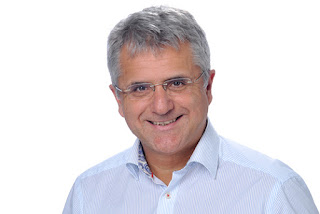
Prof. Dr. Thomas Söding (Senior Professor of New Testament at the Catholic Theological Faculty of the Ruhr University Bochum and Vice President of the Central Committee of German Catholics): I actually find it very remarkable that the Catholic Church has this instrument at its disposal, that is, that there is a World Synod of Bishops, which is now on the way to becoming a World Synod.
This means that the Church reaches an agreement on a specific topic, gives account, and makes plans for the future. This topic of the World Synod, "synodality," may seem quite abstract, but in my opinion, it is the most concrete of all that have been addressed so far.
Because it is about the way in which the Catholic Church comes together to consider what the next steps into the future might be. It was clear to me from the beginning that this would be a very important, perhaps even strategic synod – and that's why I wanted to play my role as a theological expert there with the attention it deserved, also for the public.
Thomas Söding "It was clear to me from the beginning that this would be a very important, perhaps even strategic synod."
DOMRADIO.DE: Your book has an unusual basis, namely the daily text messages from the two general assemblies of the World Synod in the fall of 2023 and 2024. How did you come up with the concept of text messages, which means "Synod with Söding"?
Söding: The title doesn't come from me, but from Elsa Fiebig, an employee of the press office of the Central Committee of German Catholics.
I had already written something every day at the previous synod, but I wasn't quite as internet-savvy at the time and had only posted it on my chair's website. Even then, the notes had aroused astonishing interest. So the question was: How can we take the next step? But I felt unable to set up a kind of blog with dialogues because my main task has always been, quite simply, to do my work as a theological expert. That is, analyzing and preparing texts in such a way that the Synod can actually make decisions.
It was very important to me that there are many other things that maintain the confidentiality of the Synod while communicating this process. And I'm very happy that in the end, we actually managed to send 26 text messages out into the world twice.
DOMRADIO.DE: That means you wrote a text message for every day the Synod met. Nevertheless, there was a strict media policy and almost a kind of news blackout regarding the Synod Hall. As I said, you still reported something daily, but without revealing anything indiscreet. How difficult was that balancing act?
Söding: That was always a consideration. But it was absolutely clear to me that I would adhere strictly to the Synod's rules. Personally, I would have liked there to have been a more open communication policy. But in previous synods, there were unfortunately massive attacks by synod participants against others, typically from the far right.
Pope Francis wanted to avoid that at all costs. That's why the pendulum may have swung a little too far in the other direction. But the Pope himself was surprised that everyone adhered to the rules so strictly.
Thomas Söding "It was important to me: I won't divulge anything, no one will be exposed here, I won't quote anything from the Synod Hall, as agreed."
It was important to me: I won't divulge anything, no one will be exposed here, and I won't quote anything from the Synod Hall, as agreed. However, it was also important to me that the Synod be a global process. Many people are involved. It's a diverse picture; it's a Catholic UN that's meeting there. And there are so many interesting aspects to it that I believe the public should also be informed.
And it was also important to me that these spiritual discussions in the Hall yielded results. They took a great deal of time, but they resulted in a kind of inventory and a cautious vision, which was ultimately captured in the final document, of what the solution might consist of. The final document of the World Synod has already been published. I documented and commented on this in my book. But through this text message, the genesis, which was quite dramatic, can now be retold.
DOMRADIO.DE: For some, the Synod didn't yield all that much, but you write, for example, that in 2023, some people were already surprised at how openly the General Assembly discussed issues that had previously been taboo for a long time. From your personal perspective, what are the main advances that have resulted from the World Synod?
Söding: For example, that the Catholic Church has been honest! All respect to the Synod Secretariat for managing to conduct this worldwide survey of believers with ten questions in advance. The questions were worded so convolutedly that you had to read them three times to fully understand them, but the answers made it clear: The Catholic Church has a problem worldwide with so-called "clericalism," that is, with an exaggerated image of the priest.
The Catholic Church needs priests, there's no question about that; they are fundamental to the understanding of the Catholic Church. But: putting these "holy" men on a pedestal is obviously a problem worldwide, and I found it very enlightening that this could be discussed openly.
Thomas Söding "The problem has been identified; I respect that this became so clear at the Synod."
Secondly, the Catholic Church has a problem worldwide with a lack of women's rights. A tremendous amount of competence and aspiration has developed in this area over the past 20 or 30 years, not least, globally, through the religious orders. This development is not adequately reflected in the current constitution of the Catholic Church. The problem has been identified; I respect that this became so clear at the Synod. Even if, for most people here, the proposed solutions are far from sufficient.
The most difficult issue for many was the question of how people live their sexuality – worldwide, not just in the North or the West. That this is often not in line with what the Catechism says, but is based on conviction. These people feel a sense of belonging to the Church; the Church wants to be an inclusive Church. This creates a great tension, and the fact that this tension has been uncovered and has led to a process that can now lead to a result is good.
Personally, I consider the World Synod's suggestions neither harmless nor vague. They are very clear; they mean more transparency, more oversight, more accountability, and changes to canon law – hardly anyone would have thought that five years ago.
Thomas Söding "Personally, I consider the World Synod's suggestions neither harmless nor vague."
DOMRADIO.DE: While your book was being written, Pope Francis died. You met then-Cardinal Robert Prevost in Rome. What impression did he make on you, and what role did he play at the time?
Söding: I met him as an active member of this World Synod. I met him as the only cardinal who appeared publicly at one of the theological-pastoral workshops and engaged in the discussion.
I'm not saying that others couldn't have done that, but he did it, and in a very clever way. It was about the question of the unity and diversity of the Church, which is one of the key questions of the Synod. I noticed—and I still find this very clever and positive—that he didn't jump into the highly emotional debates about whether, for example, gender ideology exists, or into such anthropological questions where theology is normally wise to hold back because medicine, biology, and psychology have a say.
Thomas Söding "I met Cardinal Prevost as an active member of this World Synod."
Instead, he referred to the Bible, to the basic description of the Acts of the Apostles, which states: "They continued in the apostles' teaching, in the fellowship, in the breaking of bread, and in the prayers." He didn't develop this out of nostalgia, but rather he did exactly what I personally am deeply convinced of, namely, that we must talk about what truly holds us together in the worldwide Church. Many of these agitated scenes are being pushed from the center to the periphery of the debate. The focus is on faith.
DOMRADIO.DE: You write that the synodality of the Church must not disappear again with the death of Pope Francis. How hopeful are you that synodality will continue to develop well under Pope Leo?
Söding: This synodality as an idea, as a concept, as a spiritual movement, is a response to a deep crisis in the Catholic Church. This deep crisis consists in the fact that the Catholic Church has not yet sufficiently embraced important shifts that have taken place among the people of the Church.
After the Second Vatican Council, the Church's legal code focused heavily on the authority of bishops and did not address the rights of the people of the Church in the same way, following the motto "strong bishop, strong congregation." This is now being addressed. This is a pressure that is due to reality.
On the other hand, Francis, right up until his last days, while still in the hospital, discussed with the responsible Cardinal Mario Grech how the process could be made sustainable, initially until 2028. And it was very important that Leo XIV, as the new Pope, said without reservation: "We will continue on this path. This is also my process, this is the future path of the Catholic Church." I am convinced that Leo will continue as Pope because he spoke in exactly the same way during his time before the election.
DOMRADIO.DE: You already mentioned an important date, namely 2028. There should be a kind of conclusion with a general church assembly. In your view, what should happen locally by then so that the Church becomes more synodal and can thus better proclaim the message of Jesus?
Söding: That's the key question you're asking, because there certainly isn't a single master plan for the Roman Catholic world church, but there must be a common direction, and we must not lose sight of each other on the common path. I'll relate it back to Germany now. Germany is very far along in the conception of a synodal path. The overlap with what the World Synod has decided is very large.
Thomas Söding "There certainly isn't a single master plan for the Roman Catholic world church, but there must be a common direction, and we must not lose sight of each other on the common path."
Therefore, it's important that Germany does its homework now. And that means that, starting in 2026, according to our roadmap, there will be a synodal conference at the federal level. And that the synodal reform processes continue in many dioceses, so that a wealth of experience is accumulated, which we can then bring to bear on this global church event, the Church Assembly, in 2028.
We don't believe that Germany is the best model for the entire world. But we are responding responsibly to our situation and putting the fundamental principle of Catholic synodality into practice.





.jpeg)

Comments