The real "rabies theologica", the relentless anti-clericalism of synodalists. Theologian took and broke Anti-Modernist Oath NINE times!
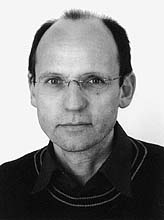
Wolfgang Beinert: Without reforms, the Church will be marginalized

In recent decades, the Magisterium has so overstretched its "clerical claim" that ecclesiastical authority is on the verge of collapse, says dogmatician Wolfgang Beinert. If the Church wants to survive, it must act "in keeping with the times." Nevertheless, the Church has a good chance of "flourishing" again.
Your latest book is called "The Form of Reform." What exactly does the form of reform look like?
Wolfgang Beinert: The Church emerged from the post-Easter gathering of Jesus' people. For them, Jesus was Lord and Master, that is, the authoritative mediator of divine revelation. He, with his message, is therefore the form that his community must take if it is to be and remain his community. The core of this message is the radical, that is, root-based, following of Jesus. Every reform must be oriented toward Jesus Christ. Jerome once said: "Following the naked Christ naked."
When I first read the title of your book, I wondered whether it shouldn't be "Forms of Reform."
Beinert: I assume you mean the many concrete requests for change that are addressed to the Church leadership.
Yes, exactly.
Beinert: Much, and a lot more, has been written about their legitimacy. But so far, it has hardly convinced those in charge. I think that with the actualization of discipleship in the spirit of the Church Father Jerome, a course would be set that would automatically lead to the right decisions.
Can you give me an example?
Beinert: If it turns out that, according to Jesus' will, women and men are equal, have equal rights, and are equally redeemed, then one can no longer hinder the ordination of women. Strictly speaking, otherwise women would not have been redeemed. Because redemption means becoming Christ-like, that is, being able to act in persona Christi. According to church officials, this is the essence of ordination.
Fierce debates are taking place in the Church about the future of the church. You write of "rabies theologica," the "theologian's rage." What exactly do you mean by that?
Beinert: The expression is (unfortunately) very old and describes the arrogant and argumentative style of conducting discussions, particularly common among theologians, in order to defend one's own opinion – often with the argument that this, and not the opposing one, is orthodox. As in large parts of the rest of society, an irritated, insulting, know-it-all tone is increasingly pervading the Church debate. But the following applies: Those who throw mud lose ground.
"The idea of synodality in the church can no longer be suppressed."
The statement that the Church is not a democracy is repeatedly used as a knock-down argument in discussions about reforms. What is your response to this?
Beinert: That this statement is based on a misunderstanding. Democracy is, first and foremost, a form of government that states that all power in a state emanates from the people. In this sense, the Church is not a democracy because it is not a state. Nor is it a monarchy, oligarchy, or aristocracy. For these are forms of government, and the Church is not a state. Its sole master is God. Democracy, however, can also refer to certain procedural norms that the government of the same name primarily uses to govern the state. They are ultimately based on objective facts. Thus, majority decision-making, elections, and the involvement of individuals in decision-making have always been appropriate ways of governing communities—just as decrees from the highest authority or committee decisions.
These procedures are also possible in the Church.
Beinert: Yes, more precisely, they have actually long been a part of it. The Church's constitution recognizes elections—we recently witnessed a papal election. It recognizes majority decisions, such as the requirement of a two-thirds majority quorum. It recognizes committees (for finances) independent of the leadership. So the church is certainly not a democracy, but it does have democratically generated governing bodies. One could also speak of synodality. We are far from exhausting the resulting possibilities and necessities. In a democratic society, democratic church practices facilitate consensus. I believe that the idea of synodality can no longer be suppressed in the church.
"Of course, there must be structures."
Although synodality has been emphasized in recent years, clericalism still prevails in the church. How is this related to the Church crisis?
Beinert: Since the Decretum Gratiani, published in the mid-12th century, the clergy has seen itself as the prominent, authentic, all-determining part of the Church. The laity are considered merely concessional Christians by His grace. The social changes since at least the 19th century, with the growing shared responsibility of all for the fate of institutions, awakened in the Church a memory of the fundamental biblical concept of the Church as the People of God, organized as the Body of Christ and thus providing space for the Holy Spirit like a temple. The idea of the equality of all members of the people is fundamental to all these images of the Church. Of course, there must be structures. But these all have a service character – they are meant to serve the whole as special organs, just as the stomach enables life for the entire body.
This awareness, however, has largely been lost to the Church since its isolation from the "world" as a result of the French Revolution.
Beinert: Because they saw their salvation in the most absolute emphasis on authority, which at the First Vatican Council was then completely concentrated in the primatial position of the Roman bishop. The Second Vatican Council attempted to correct this imbalance, but failed.
With the pontificates from Paul VI to Benedict XVI, papalism increased even further.
Beinert: Pope Paul VI even had a "preliminary remark" added to the Council's acts, granting the pope power over the entire Church "ad placitum—at his discretion." That was far more than the First Vatican Council had ever said. The crisis erupted at the moment when the Encyclical "Humanae Vitae" (1968) simply overstretched the capacity of Catholics to receive it and obey it. Clerical demands had been overstretched, like the tension spring of a clock.
You write that a "remarkable decline in ecclesiastical authority" is unmistakable. To what extent?
Beinert: The ecclesiastical authorities demand "filial obedience." The salutation in pastoral letters was: "Beloved children of the diocese." No bishop can afford that anymore. The infantilism suggested by this has given way to a stately self-confidence among the so-called laity. This is particularly noticeable in the area of sexual and family ethics. The vast majority of Catholics, even those who are otherwise "faithful" to the Church, hardly care about the standards it sets. Sunday observance is one of the Church's most difficult commandments. With one exception, the number of Mass attendees in German-speaking dioceses is in the single digits. And the rest probably don't exactly have a guilty conscience.
"Pope Leo XIV can listen."
Where do you see the "systemic loss of empathy" of the Church leadership?
Beinert: The Church leadership naturally has a duty to maintain order in the part of the Church entrusted to it and, if necessary, to intervene with sanctions. But this must be done in the spirit of understanding, the presumption of innocence, and healing care – and this is precisely what is often lacking. One can think of the asymmetries in censorship procedures. The sometimes undignified treatment of those who are disliked will come to mind for many. We must generally stay here – also for reasons of empathy.
Will Pope Leo XIV succeed in fully regaining empathy?
Beinert: I perceive that many Catholics expect precisely this from the new Pope. Whether he will succeed cannot yet be conclusively determined, but Pope Leo XIV can listen. And from his previous life, he has a unique network with the Church of various cultures – North and South America, head of a worldwide order, head of the Dicastery of Bishops.
Does the Church still have hope for further development, or is it currently destroying itself?
Beinert: Here, too, a distinction is necessary: "The Church" can mean the universal Church. It can also mean the community of faith in a specific region. The Church as a whole is continuing to develop, especially in Africa and Asia. In the northern hemisphere and here in Germany, the situation is notoriously different. Here, Christians have reached a crossroads within the Church. Without reforms in the deepest sense, it could well be marginalized or minimized, as happened to African Christianity in antiquity. But if it is willing to act in a contemporary way on its journey through time, if it understands how to make the joy of the Gospel a joy for its contemporaries, it will flourish anew and become a blessing.
Background
Beinert entered the Bamberg seminary in October 1952. The rector was Johannes Lenhardt, the spiritual director was the Jesuit Theo Wild. In the winter semester of 1952/53, he began his studies at the Bamberg School of Philosophy and Theology. The ecclesiastical study regulations stipulated mainly philosophical courses in the first semesters. In autumn 1953, he was sent to Rome as an alumnus of the Archdiocese of Bamberg to continue his studies in philosophy and Catholic theology at the Pontifical Gregorian University as a member of the Collegium Germanicum. According to Beinert, a generational change took place among the lecturers at the Gregorian University during his years of study: "The younger professors ... lectured in the truest sense under the eyes of the Holy Office with the strict Cardinal Alfredo Ottaviani on the bridge. But with courageous clarity, they sought a fairly open dialogue with modern currents, e.g. philosophically with existentialism, theologically with historical-critical Biblical exegesis. The ecumenical idea also found its way into the Gregoriana." This led to the schizophrenic situation that the students had to take the anti-modernist oath several times (Beinert himself nine times), in which they condemned much of what had just been taught in the lecture theatre; they got rid of the ritual with great speed and then signed that they had taken the oath.
The Oath against Modernism which Father Beinert took nine times and which he has spent his whole life betraying.
To be sworn to by all Clergy, Pastors, Confessors, Preachers, Religious Superiors, and Professors in Philosophical Theological Seminaries.
I . . . . firmly embrace and accept each and every definition that has been set forth and declared by the unerring teaching authority of the Church, especially those principal truths which are directly opposed to the errors of this day.
And first of all, I profess that God, the origin and end of all things, can be known with certainty by the natural light of reason from the created world (see Rom. 1:19), that is, from the visible works of creation, as a cause from its effects, and that, therefore, his existence can also be demonstrated:
Secondly, I accept and acknowledge the external proofs of revelation, that is, divine acts and especially miracles and prophecies as the surest signs of the divine origin of the Christian religion and I hold that these same proofs are well adapted to the understanding of all eras and all men, even of this time.
Thirdly, I believe with equally firm faith that the Church, the guardian and teacher of the revealed word, was personally instituted by the real and historical Christ when he lived among us, and that the 2 Church was built upon Peter, the prince of the apostolic hierarchy, and his successors for the duration of time.
Fourthly, I sincerely hold that the doctrine of faith was handed down to us from the apostles through the orthodox Fathers in exactly the same meaning and always in the same purport. Therefore, I entirely reject the heretical’ misrepresentation that dogmas evolve and change from one meaning to another different from the one which the Church held previously. I also condemn every error according to which, in place of the divine deposit which has been given to the spouse of Christ to be carefully guarded by her, there is put a philosophical figment or product of a human conscience that has gradually been developed by human effort and will continue to develop indefinitely.
Fifthly, I hold with certainty and sincerely confess that faith is not a blind sentiment of religion welling up from the depths of the subconscious under the impulse of the heart and the motion of a will trained to morality; but faith is a genuine assent of the intellect to truth received by hearing from an external source. By this assent, because of the authority of the supremely truthful God, we believe to be true that which has been revealed and attested to by a personal God, our creator and lord.
Furthermore, with due reverence, I submit and adhere with my whole heart to the condemnations, declarations, and all the prescripts contained in the Encyclical Pascendi and in the decree Lamentabili, especially those concerning what is known as the history of dogmas. I also reject the error of those who say that the faith held by the Church can contradict history, and that Catholic dogmas, in the sense in which they are now understood, are irreconcilable with a more realistic view of the origins of the Christian religion. I also condemn and reject the opinion of those who say that a well-educated Christian assumes a dual personality-that of a believer and at the same time of a historian, as if it were permissible for a historian to hold things that contradict the faith of the believer, or to establish premises which, provided there be no direct denial of dogmas, would lead to the conclusion that dogmas are either false or doubtful. Likewise, I reject that method of judging and interpreting Sacred Scripture which, departing from the tradition of the Church, the analogy of faith, and the norms of the Apostolic See, embraces the misrepresentations of the rationalists and with no prudence or restraint adopts textual criticism as the one and supreme norm.
Furthermore, I reject the opinion of those who hold that a professor lecturing or writing on a historico-theological subject should first put aside any preconceived opinion about the supernatural origin of Catholic tradition or about the divine promise of help to preserve all revealed truth forever; and that they should then interpret the writings of each of the Fathers solely by scientific principles, excluding all sacred authority, and with the same liberty of judgment that is common in the investigation of all ordinary historical documents.
Finally, I declare that I am completely opposed to the error of the modernists who hold that there is nothing divine in sacred tradition; or what is far worse, say that there is, but in a pantheistic sense, with the result that there would remain nothing but this plain simple fact-one to be put on a par with the ordinary facts of history the fact, namely, that a group of men by their own labor, skill, and talent have continued through subsequent ages a school begun by Christ and his apostles. I firmly hold, then, and shall hold to my dying breath the belief of the Fathers in the charism of truth, which certainly is, was, and always will be in the succession of the episcopacy from the apostles. The purpose of this is, then, not that dogma may be tailored according to what seems better and more suited to the culture of each age; rather, that the absolute and immutable truth preached by the apostles from the beginning may never be believed to be different, may never be understood in any other way.
I promise that I shall keep all these articles faithfully, entirely, and sincerely, and guard them inviolate, in no way deviating from them in teaching or in any way in word or in writing. Thus I promise, this I swear, so help me God. . .
And in Latin
Ego N. N. firmiter amplector ac recipio omnia et singula, quae ab inerranti Ecclesia magisterio definita, adserta ac declarata sunt, praesertim ea doctrinae capita, quae huius temporis erroribus directo adversantur.
Ac primum quidem, Deum, rerum omnium principium et finem, naturali rationis lumine per ea quae facta sunt, hoc est per visibilia creationis opera, tamquam causam per effectus, certo cognosci, adeoque demonstrari etiam posse, profiteor.
Secundo, externa revelationis argumenta, hoc est facta divina, in primisque miracula et prophetias admitto et agnosco tanquam signa certissima divinitus ortae christianae religionis, eademque teneo aetatum omnium atque hominum, etiam huius temporis, intelliegentiae esse maxime accommodata.
Tertio, firma pariter fide credo Ecclesiam, verbi revelati custodem et magistram, per ipsum verum atque historicum Christum, cum apud nos degeret, proximo ac directo institutam eandemque super Petrum, apostolicae hierarchiae principem, eiusque in aevum successores aedificatam.
Quarto, fidei doctrinam ab Apostolis per orthodoxos Patres eodem sensu eademque semper sententia ad nos usque transmissam, sincero recipio; ideoque prorsus reicio haereticum commentum evolutionis dogmatum, ab uno in alium sensum transeuntium, diversum ab eo, quem prius habuit Ecclesia; pariterque damno errorem omnem, quo, divino deposito, Christi Sponsae tradito ab eaque fideliter custodiendo, sufficitur philosophicum inventum, vel creatio humanae conscientiae, hominum conatu sensim efformatae et in posterum indefinito progressu perficiendae.
Quinto, certissime teneo ac me etiam, qua par est, reverentia subicio totoque animo adhaereo damnationibus, declarationibus, praescriptis omnibus, quae in Encyclicis litteris Pascendi et in Decreto Lamentabili continentur, praesertim circa eam quam historiam dogmatum vocant. Idem reprobo errorem affirmantium, propositam ab Ecclesia fidem posse historiae repugnare, et catholica dogmata, quo sensu nunc intelliguntur, cum verioribus christianae religionis originibus componi non posse. Damno quoque ac reicio eorum sententiam, qui dicunt christianum hominem eruditiorem induere personam duplicem, aliam credentis, aliam historici, quasi liceret historico ea retinere, quae credentis fidei contradicant, aut praemissas adstruere, ex quibus consequatur, dogmata esse aut falsa aut dubia, modo haec directo non denegentur.
Reprobo pariter eam Scripturae sanctae diiudicandae atque interpretandae rationem, quae, Ecclesiae traditione, analogia fidei et Apostolicae Sedis normis posthabitis, rationalistarum comentis inhaeret, et criticem textus velut unicam supremamque regulam haud minus licenter quam temere amplectitur. Sententiam praeterea illorum reicio, qui tenent, doctori disciplinae historicae theologicae tradendae aut iis de rebus scribenti seponendam prius esse opinionem ante conceptam sive de supernaturali origine catholicae traditionis, sive de promissa divinitus ope ad perennem conservationem uniuscuiusque revelati veri; deinde scripta Patrum singulorum interpretanda solic scientiae principiis, sacra qualibet auctoritate seclusa, eaque iudicii libertate, qua profana quaevis monumenta solent investigari.
In universum denique me alienissimum ab errore profiteor, quo modernistae tenent in sacra traditione nihil inesse divini, aut, quod longe deterius, pantheistico sensu illud admittunt, ita ut nihil iam restet nisi nudum factum et simplex, communibus historiae factis aequandum: hominum nempe sua industria, solertia, ingenio scholam a Christo eiusque Apostolis inchoatam per subsequentes aetates continuantium. Proinde fidem Patrum firmissime retineo et ad extremum vitae spiritum retinebo, de charismate veritatis certo, quod est, fuit eritque semper in episcopatus ab Apostolis successione; non ut id teneatur quod melius et aptius videri possit secundum suam cuiusque aetatis culturam, sed ut nunquam aliter credatur, nunquam aliter intelligatur absoluta et immutabilis veritas ab initio per Apostolos praedicata.
Haec omnia spondeo me fideliter, integre sincereque servaturum et inviolabiliter custoditurum, nusquam ab iis sive in docendo sive quomodolibet verbis scriptisque deflectendo. Sic spondeo, sic iuro, sic me Deus adiuvet et haec sancta Dei Evangelia.
Given by His Holiness St. Pius X, September 1, 1910. To be sworn to by all Clergy, Pastors, Confessors, Preachers, Religious Superiors, and Professors in Philosophical-Theological Seminaries.





.jpeg)

Comments