Bishops refuse to go on synodal suicide mission
It doesn't surprise me that four bishops aren't participating in the future German synodal committee.

Four bishops are resisting being co-opted into the "Synodal Committee," a role they never agreed to. For the first time, lay representatives are also criticizing their local bishops, accusing them of only raising concerns instead of contributing constructively. But it's not surprising that, after their experiences on the Synodal Path, the four have lost faith in a protected framework where genuine listening is possible. A commentary.
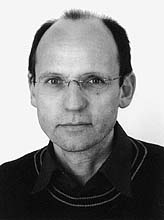
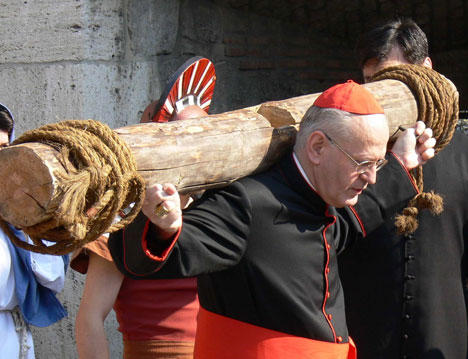
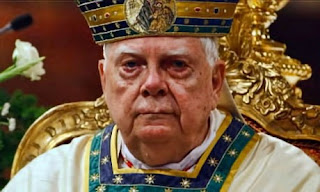
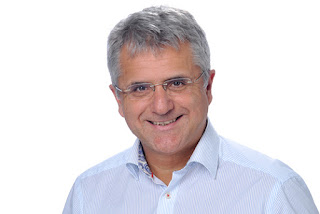
The fact that Cardinal Rainer Maria Woelki of Cologne and Bishops Stefan Oster of Passau, Rudolf Voderholzer of Regensburg, and Gregor Maria Hanke of Eichstätt are once again opposing the "Synodal Committee" is bringing them a lot of criticism. I can understand them. What's the point?
The Catholic Church, with 1.4 billion members, is the largest religious community in the world. Its head is the Pope in Rome. Decisions for the dioceses are made by the bishops, who are considered successors to the apostles. Decisions that affect all Catholics are made by the Pope. The Pope and bishops are supposed to ensure that central tenets of the faith are passed on unadulterated. This principle is considered one of the success factors of the 2,000-year-old institution, on which its enormous stability is based. Today, it also ensures that the Church throughout the world remains independent of attempts at state influence.
Warnings have been reinterpreted as encouragement
If you want to change important things in the Church, it cannot be done without the headquarters in Rome. And that always has the entire universal Church in mind. Nevertheless, the German bishops, together with the Central Committee of German Catholics (ZdK), which includes representatives of lay councils and Catholic associations, initiated a reform process in which topics were discussed that cannot be changed from Germany: democratization, celibacy, offices for women, sexual morality. The justification for this was the abuse scandal, which, from the perspective of those responsible, is connected to all of these issues. Since then, discussions have taken place, and demands for reform have been translated into documents after many meetings. However, the question of how the Catholic Church in Germany, which is constantly losing members, can get back on track through its own efforts has been left out.
A certain Cardinal Robert Francis Prevost, the new Pope Leo XIV, also signed a letter from the Curia in early 2024 that made it very clear that Germany's special path was not desired.
The Roman headquarters responded with warnings, vetoes, and stop signs. The trick of the addressees in Germany: All these warnings were reinterpreted as encouragement. A certain Cardinal Robert Francis Prevost, the new Pope Leo XIV, also signed a letter from the Curia in early 2024 that made it very clear that Germany's special path was not desired.
Nevertheless, it continued. The Synodal Path had since become a Synodal Committee, which aims to establish a permanent advisory and decision-making body for the Catholic Church in Germany by 2026. However, there is currently no legitimacy for this under canon law. And the Vatican has repeatedly stated that leadership in the Catholic Church must remain linked to the office of bishop and cannot simply be delegated to committees.
One can only wonder about ZdK Chairwoman Irme Stetter-Karp, who said at the committee's most recent meeting: "We are entering this meeting with the support of Rome. Pope Leo XIV has made it clear that he wants to stand for a synodal church."
I'm not surprised when four German bishops say: We are happy to participate in the search for new synodal structures, but we don't want to participate in a project that has so often been criticized and curbed by Rome. Somehow, playing by common rules when you're part of a world church also has something to do with fairness, doesn't it?
The fact that these four are now, without being asked, listed as members of the future church body being prepared by the Synodal Committee must be irritating. In their letter to the Committee's Presidium, the bishops write:
"We must note: Here, a body that cannot claim any canonical authority has decided that all diocesan bishops in Germany, including us, should be members of a future committee. We note this with surprise."
They had already declined to participate in the Synodal Committee in the past; their dioceses also do not contribute to its funding.
The bishops emphasize that they "will continue to do everything in their power to promote Roman synodality in our dioceses." What Rome understands by synodality can be read in the final document of the last World Synod under Pope Francis: "In simple terms, one can say that synodality is a path of spiritual renewal and structural reform to make the Church more participatory and missionary, that is, to make her more capable of walking alongside every man and woman and transmitting the light of Christ" (28). However, the primacy of the bishops is not undermined: "In a synodal Church, the decision-making power of the bishop, the college of bishops, and the Bishop of Rome is inviolable, since it is grounded in the hierarchical structure of the Church created by Christ" (92). This is unlikely to make further work in this country any easier.
The letter of the four bishops was also criticized for the first time by representatives of their diocesan councils. For some media outlets, this was a "bombshell." When laypeople now accuse their bishops of saying that "anyone with fundamental concerns should bring them into the process and not stay away from the discussions," they fail to recognize that the four bishops have repeatedly tried to do precisely that during the Synodal Path – in vain.
Pressure to the goal?
I was there myself for a while: The setting of the Synodal Path left little time for a genuine exchange of arguments. With a speaking time of between one and three minutes, it's almost impossible to conduct theological debates. Thus, the four bishops and other participants with dissenting positions had little chance of being heard. The framing of "conservative – bad" and "liberal – good" made genuine listening almost impossible.
Theologian Marianne Schlosser also reported in an interview that the synod members with different opinions were personally attacked and "cornered." Many were also tempted to "give up when arguments, so to speak, fall onto the paved path, are trampled on, and swept away."
Dissenters were often met with hostility, emotional pressure was exerted, and political instruments were also used to bring them into line. For example, the basic text "Living in Successful Relationships" failed to achieve the required two-thirds majority of the bishops present in a secret ballot in the fall of 2022. The result: A roll-call vote was now to be held, and a counter-motion for a secret ballot was rejected. Those who disagreed were to be made public, increasing the pressure to go along with the reform process. Secret balloting is actually a classic right that serves to protect minorities. Where was the protected space that Pope Francis considered a necessary criterion for true synodality?
It is, of course, remarkable how much time and commitment many people put into these bodies, firmly convinced that they are making the Church better. But do they really believe that this is precisely how success can be achieved? Wasn't it a suicide mission from the very beginning?
Even though Irme Stetter-Karp and Bishop Bätzing, in a letter in response, now even want to interpret their deliberations following the World Synod as an "explicit mandate to the Bishops' Conference," doubts remain about the "tailwind." As long as there is no signal of willingness to compromise on the theologically difficult demands of the Synodal Path, the mistrust will not diminish. Especially among those bishops whose trust has obviously been lost and who no longer believe that this is a common path that can truly be fruitful. Can this be remedied?





.jpeg)

Comments