Universalist ethos to replace Catholicism in the Synodal Church
Hans Joas: "The shameless openness worries me"

Sociologist Hans Joas discusses his new book "Universalism," the supposed decline of morality (Cathcon- what world is he living in?) in society, the appropriation of Christian principles by politics, and the future viability of the churches in the 21st century.
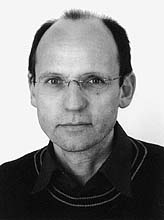
Hans Joas is one of the most important social-philosophical thinkers in Germany (read a 2007 interview with him here). A particular focus of Joas's research is the origin of values. In his new book, he examines moral universalism and the question of when it emerged and how it has developed historically.
DIE FURCHE: Mr. Joas, what do you understand by moral universalism?
Hans Joas: Moral universalism is the assumption that people are obligated not only to those close to them, but to all people. Of course, many of our moral obligations relate to those close to us, such as our families, but not only to them. Our moral responsibility is not limited to the living, but also applies to future generations or even to those who have already died, their suffering, and the injustice they have suffered.
DIE FURCHE: This assumption is not new; the idea that this way of thinking goes hand in hand with the emergence of Christianity has long persisted. However, in your book, you put forward the thesis that its origins are much older.
Joas: Exactly. For a long time, there was a tendency among Christians to attribute the emergence of this ethos to the work of Jesus Christ and the Gospels. In recent decades, this anti-Judaistic view that previously only the law and not a universal ethos of love had prevailed has been abandoned, and clear beginnings of moral universalism have been identified even in the prophets of the Old Testament. Secularist perspectives have provided the impetus for the claim that moral universalism only arrived with the Enlightenment in the 18th century.
I believe, however, that neither of these is true; rather, its origins lie earlier, namely, indeed, with the aforementioned Hebrew prophets, but not only with them, but also in ancient Greece, India, and China in the period from 800 to 200 BC. With this, I am drawing on the thinking of a great 20th-century philosopher, Karl Jaspers, and his thesis of a so-called "axial age of world history" in the period just mentioned. This also makes it clear that moral universalism cannot be viewed exclusively as a European, Western, or Occidental creation.
He is an Ernst Troeltsch Honorary Professor at the Theological Faculty of the Humboldt University of Berlin and teaches as a member of the Committee on Social Thought at the University of Chicago. He has received numerous awards for his work, including the Hans Kilian Prize, the Max Planck Research Award, the Prix Ricoeur, the Salzburg University Weeks Theological Prize, and most recently the German Sociological Association's Lifetime Achievement Award.
DIE FURCHE: That doesn't apply to the Romans...
Joas: It's important to note that this is an ethos, not politics. The prophets were not apolitical, but they were not rulers. Of course, the Roman Stoicism must be included in the history of moral universalism. I have not mentioned it in my list because, like Christianity, it does not fall within the aforementioned Axial Age, but rather follows it. It is discussed in detail in my book.
DIE FURCHE: When it comes to moral action toward one's "neighbor" and the question of who exactly is "one's neighbor," Christians immediately think of the parable of the Good Samaritan. How does this fit into your portrayal of moral universalism?
Joas: It's very closely related to that, because it's about helpfulness and about breaking away from enemy stereotypes and taking humanity as a role model. In recent years, the parable has come particularly to the fore in the context of debates about migration policy. However, I have the impression that it's being used somewhat sweepingly by some advocates of a less restrictive migration policy. It's undisputed that it's about helping those far away, but this doesn't mean complete self-sacrifice and self-dissolution.
What concerns me are not only the blatant violations of this ethos, but the way it is shamelessly adopted, for example in forms of the new nationalism, in the politics and warfare of Netanyahu and President Trump. Hans Joas
DIE FURCHE: As you've already indicated, the Holy Scriptures are often used as an argument in political debates. But isn't it actually the case today that the well-being of people is becoming less and less the yardstick for political decision-making?
Joas: One must be aware that the ethos I'm speaking of was never the truly lived ethos of all people, and certainly not of all rulers. This also applies to those who professed to this ideal. Let's take the example of Thomas Jefferson, who wrote the famous phrase "All men are born equal" into the preamble to the American Declaration of Independence. Yet he himself was a slave owner. So, one can see a clear gap between this claim and reality. What I'm saying is that this gap has always been great, and it's not just today.
What concerns me today, however, are not only the blatant violations of this ethos, but the way in which it is being clearly and shamelessly adopted, for example in forms of the new nationalism, in the politics and warfare of Netanyahu and President Trump. His slogan "Make America Great Again" already makes it clear that American interests must be placed unconditionally above those of others. This shameless openness of exclusive self-interest is what deeply concerns me right now.
There is also a moral obligation to consider the consequences of immigration for the native population and not to suppress this by referring to the moral universalism of Christianity. Hans Joas
DIE FURCHE: Trump's vice president, J.D. Vance, bases his migration policy on the Christian doctrine of the "Ordo Amoris," interpreting it in terms of a graduated charity. Is the Church in danger of being politically abused here?
Joas: Vance misrepresents Augustine and Thomas when he says that our moral obligations expand in concentric circles – first, we are obligated only to those close to us, then to those somewhat further away, and only if some resources remain at the end do we also have to spend them on those far away. That is certainly not Christian.
I also find the late Pope Francis's rebuttal not entirely convincing. He seems to have thought that ethically, there should be no distinction at all between those close to us and those far away. We have moral obligations both in our immediate vicinity and towards those far away, but there is no formula that allows us to calculate how much should be spent on one and how much on the other.
Rather, it's about a constant balance, achieved through practical judgment, between close-to-the-field obligations and those far away, and in this, the respective degree of need must play a role. This applies not only to us as individuals, but also politically, for example, in migration policy. There is also a moral obligation to consider the consequences of immigration for the native population—and not to dismiss this by referring to the moral universalism of Christianity.
DIE FURCHE: Do you think populists like Vance will have a harder time rubbing shoulders with the new Pope Leo in the future than was the case under Francis?
Joas: That's an exciting thought, even if I think it's still too early to pass judgment on this, especially since we don't yet know much about the new pope's positions. So far, however, he gives the impression that he's not arguing in terms of pure moral radicalism, but rather reflecting on how difficult the situations often are in which political decisions have to be made.
DIE FURCHE: In 2022, you asked the question in a book: "Why Church?" What are your assessments for 2025? There haven't been many reasons for optimism in this regard in recent years.
Joas: If you ask the question in relation to the situation in Germany, and probably also in relation to the Austrian situation—and not in relation to the global situation—then there is certainly cause for pessimism regarding the number of people leaving the church or the church's ever-decreasing authority in public debates. However, I also tend to call for a sense of proportion. I'm always surprised when the situation is illustrated with photos of empty churches that supposedly no one goes to anymore, because that's simply not true. When I go to church, it's usually not empty.
DIE FURCHE: But the number of people leaving the church tells a different story...
Joas: Yes, but compared to other social organizations, the churches still have huge membership numbers and also very high numbers of those who are actively involved. For me, this is evident in the Synodal Path of the German Catholic Church, in which I am also involved. I sense vitality and momentum there, rather than a doomsday scenario, and this also applies to the congregations.
For me, another phenomenon is problematic: polarization within the Church. It would be catastrophic if this Synodal Path resulted in a hostile relationship between the various camps. I think the only way to prevent that is a convincing shared memory of what Christianity truly is.
If we try to summarize Christianity in a single formula, which is of course always unsatisfactory with religions, we recognize three central components: moral universalism, a specific individualism or personalism, and the ethos of love. This brings us back to the beginning of our conversation, where we spoke about the moral obligation toward all people.
If people perceive Christian churches as strange, closed organizations, they have no appeal for them. As communities of those inspired by this universalistic ethos, the churches can have a new opportunity. Hans Joas
DIE FURCHE: Could this be an opportunity for the churches?
Joas: I think that even many people today who are not Christians are enthusiastic about these ideas, and they need to realize that this universalistic ethos is central to Christianity. If, on the other hand, they perceive Christian churches as strange, closed organizations, they have no appeal for them. As communities of those enthusiastic about this ethos, the churches can have a new opportunity. In addition, Christianity is based on the experience and idea that God loves all people. This not only prevents hostility toward others, but also unleashes one's own capacity for love. You can explain this idea to people who have had no previous contact with Christianity in such a way that, out of this feeling of security, of being loved ourselves, we tangibly become other people. In my experience, this too has undiminished appeal for many today.
DIE FURCHE: You mentioned the polarisation in the Church. But isn't it ultimately a reflection of social developments?
Joas: True, it is often such a reflection, but that's precisely what's offensive, since Christian gatherings should be conspicuous precisely because they operate differently. There were situations at the meetings of the Synodal Path that truly reminded me of the worst forms of parliamentarism, and in which I was quite despairing. However, the votes didn't end disastrously; there were simply enough people on both sides who were aware that a total collision had to be avoided. In this respect, the Synodal Path can be considered constructive so far, even though I can't, of course, say what will happen next.
Cathcon: The modernists are entirely to blame for the polarisation in the Church.
DIE FURCHE: Society is becoming increasingly individualistic, and this is also noticeable in Christianity; everyone is crafting their own faith. Are we experiencing an individualization or even an "esotericization" of faith?
Joas: These tendencies, for everyone to craft their own religious worldview, extend far beyond Christianity. However, I wouldn't call it a major future trend, because the sociologically interesting question here is whether these "tinkerers" will succeed in passing on their worldview to their own children or even to future generations. As a rule, they haven't succeeded so far.
However, it makes me unhappy when celebrities in the media, when asked about their faith, only refer to it as a source of strength and comfort in difficult situations in life. Of course I have nothing against people finding sources of strength; we all need them. But you can't believe religiously with an intention, for example to achieve a desired psychological effect. Faith is not something that I can simply decide on. Christian faith in particular goes far beyond such an individualistic tonic in the ethos described.
In this respect, churches should also be careful and not advertise themselves according to the motto "Come to us and you will feel the positive effects on your soul". They should rather rely on the persuasive power of the great story of Jesus Christ and the inspiring ethos itself.





.jpeg)

Comments