Modernist co-option of Newman continues
Why the new Doctor of the Church, Newman, is an important signal
Today, the recently appointed Doctor of the Church, John Henry Newman, is recognized and appreciated. But that wasn't always the case, comments Oliver Wintzek. This is precisely why the Church still needs people like the English thinker today.

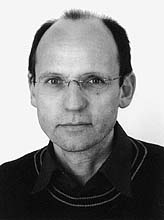
Prof. Dr. Oliver Wintzek is Professor of Dogmatic Theology and Fundamental Theology at the Catholic University of Mainz. He also works as a co-author at the Jesuit Church in Mannheim.
Leo XIV declared St. John Henry Newman a Doctor of the Church. His namesake, Leo XIII, spoke of Newman almost affectionately as "il mio cradinale," having created the theological polymath and British gentleman, who had converted to Catholicism, a cardinal in 1879 (without Newman ever becoming a bishop).
In the same year, the encyclical "Aeterni Patris" was published, which promoted a re-creation of the theology of St. Thomas Aquinas as binding for all time. Until his death in 1890, Newman pursued a different path: Where Thomism forbade any (organic) development of the doctrine of faith, Newman saw it precisely as the guarantor of continuity! This may not sound spectacular, but it identifies two opposing strategies for justifying belief in God—with repercussions that extend to the present day: First, the unchanging truth of faith (believe), which is to be accepted on the basis of God's authority; second, the attitude of faith (faith), whose worthiness of approval must be proven anew each time before the forum of reason. This can only be achieved if the contents of faith are continually reformulated, since they are always based on human interpretation.
In this context, Newman advocated a superior role of (educated) conscience as the final authority for assents to faith. In the context of the 1870 Dogma of Infallibility, which Newman viewed critically in its rationale, he was dubbed the "most dangerous man in England" by Henry Manning, the Cardinal of Westminster. The Anti-Modernist Oath of 1910 also attempted to ward off this danger of a conscience-based development of doctrine: "I reject the heretical fabrication of a development of doctrines […] that men […] have, through their spirit, continued the doctrine begun by Christ and the Apostles through succeeding generations," was the text of the oath.
This has long since become obsolete; the new Doctor of the Church has been proven right by historical developments. Newman said he would toast the Pope at any time—he would probably do so now to Leo XIV as well—but first to conscience. I would add: "Newmen" are needed today, regardless of gender, because loyalty to the Church means adherence to its continuous transformation. And: In Anchorage, conscience was rather absent.





.jpeg)

Comments