Modernist wants to redefine episcopacy out of meaningful existence and yet more liturgical change
Theologian advocates for authentic Christianity in the Church crisis

Modernist, synodalist form as long as your arm
Is God Uninteresting?
Religious commitment has been declining for years. But this could be an opportunity for Christianity, believes theologian Matthias Sellmann. Because where the church functions well, the likelihood of credible encounters increases.
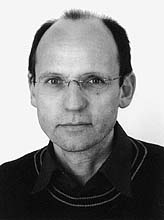
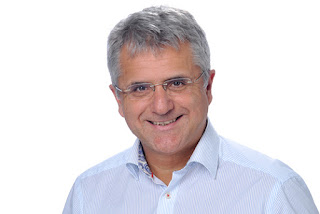
Professor Matthias Sellmann (Chair of Pastoral Theology at the Ruhr University Bochum): I believe that addressing people with religion will continue to generate interest. I translate authentic Christianity as Christians having a passion for the possible. They are people who believe it's possible that relationships can continue, who believe it's possible that this earth can be saved, that one can reconcile with one's neighbor, that illness and death are not the end. And where people live this, where they radiate mystery, where they radiate joy, where they radiate generosity, commitment, and humor, you might not say they're authentic Christians, but you will say they're very interesting people. What motivates these people?
Matthias Sellmann
"I translate authentic Christianity as Christians having a passion for the possible."
DOMRADIO.DE: What can the Church offer in this regard? What should they look like?
Sellmann: There's a wide range, and it's also my job to think about measures in this regard. First and foremost, it's important that we convey an everyday experience. This has a lot to do with understandable language, similar to what you do as a radio station. You have to speak understandably, you have to be approachable, and talk about God in everyday life. In Germany, faith is discussed far too little. People don't talk about their religiosity. That's why the idea develops that the other person is probably just as unreligious as I am and not interested in it at all. But that's not true at all. When people talk about religion, about their faith, about what drives them, there's usually a great deal of interest. But that also has to do with inspiring liturgies. The great mystery of worship services, of the universal Church. We experienced during the conclave how interesting and mysterious that can be, and also how bizarre. But even bizarreness is an incentive.
And then the question arises: how diaconal is this Church? Is it truly at my side when I'm feeling unwell? And not in an abstract way, but very concretely in fascinating, helpful personalities, in the telephone counseling service, in emergency counseling, in hospice chaplaincy. Language, liturgy, diaconal work – these are three markers with which the Church can once again gain attention for its credibility today.
Matthias Sellmann
"Language, liturgy, and social work—these are three markers with which the Church can once again gain attention for its credibility."
DOMRADIO.DE: Speaking of credibility: How would the Church have to change so that people truly accept these offerings?
Sellmann: At every point in the church's history, it must be authentic in its bishops, but also in its sextons, in its believers, and in its neighbors. The church is currently undergoing very, very significant changes. Everyone involved in congregations, parishes, and even associations knows this. Of course, it's decreasing: churches are being demolished. Everything is being reorganized. That's the structural level, which is very, very important. The relationship with the state is also very important, and regulations must be readjusted there.
The Church as a whole should be recognizable—and I'm using a dangerous word here—but that's my job, too—as a "service provider for successful living and successful communities." This has a lot to do with what I just said, but also at the organizational level. This means being an exciting network partner for city tourism, the fire department, the police, mosque associations, Caritas, Diakonie, welfare, etc. You should also be able to network with the concerns of non-religious partners. It should be evident that you are offering a commitment to people who want to take on volunteer work. This commitment should be of high quality. So, there are a lot of organizational qualifications that a church can score points with. As an adult today, you want to have a professional church as a counterpart. And church people can do that, too. Pastoral care is another very important point. Pastoral care is actually needed everywhere, not just within the church. And that requires new job profiles, new team solutions, new organizational solutions.
I believe a new concept of the Office of Bishop and new liturgical forms are also needed.
Matthias Sellmann
"In Germany, Faith is discussed far too little."
DOMRADIO.DE: So, a great effort must be made there. Your colleague Jan Loffelt, Professor of Practical Theology, believes the belief-in-God train has left the station. What if he were right?
One in four church members in Germany is considering leaving.
The trend of declining membership numbers in Christian churches in Germany continues. This is shown by initial data from the Bertelsmann Foundation's new Religion Monitor 2023. At the same time, many people agree: You can be a Christian without a church. This could permanently change the importance of churches in society
Sellmann: Jan Loffelt is right in many ways, especially when he points out that we shouldn't take the issue of the lack of God so lightly. I believe that, especially in a crisis of God, you need a strong church, not a weak church. That's where we differ. If he's right, if God is truly absent, then he's definitely doing this so that we can understand something anew. He will never simply be absent arbitrarily. This God isn't like that. And that's why we must listen carefully to him. We must also listen carefully when he isn't speaking. But we all have to ask ourselves what that means.
Matthias Sellmann
"The church should (...) be recognizable as a 'service provider for successful life and successful communities.'"





.jpeg)

Comments