Danger to the Church from ordaining women as deacons
The following article shows how many and how people would assume roles which they think as intermediate before full priesthood.
Controversial Issue: Women's Diaconate
The almost perfect diaconate dilemma
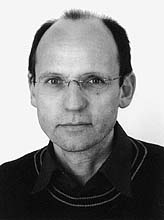
The theologian and pastor Stephan Schmid-Keiser, who holds a doctorate in liturgical studies and sacramental theology.

Where does the current "no" to the ordained women's diaconate lead? Pope Francis throws it into the debate like an insurmountable stop sign. Dorothea Reininger identified the dilemma between the core diaconal mission and the sacramental structure of the Church as the crux of the debate. Building on this, the need for a thorough clarification of perspectives on roles and ministries in the Church will be discussed here.
Exemplary voices demonstrate how pastoral workers struggle with their understanding of their roles. A pastoral worker in German-speaking Switzerland commented:
"I experience the understanding of roles in my pastoral work... as a constant challenge, whether in discussions with other pastors or as a circumstance that is not sufficiently reflected upon in all liturgical activities."
One pastor spoke more specifically about his role as a permanent deacon. His duties are clearly listed in the Code of Conduct, but his deployment in parishes is rather difficult in terms of position and collaboration with other pastors. If one works more in departments and teams, pastoral workers who are not eligible for ordination should be considered equal in status. And if women were allowed to serve as deacons, they wouldn't be allowed to preside over the Eucharist, administer the anointing of the sick, or pronounce absolution at confession:
"The office of permanent deacon in our pastoral ministry is the most difficult in large teams."
"It's also difficult in Austria and Germany when part-time permanent deacons, as ordained ministers, participate in the liturgy and thus displace the full-time and theologically trained pastoral assistants." This deacon saw himself as accepted within his own team. However, if he were "a pastoral assistant" and wanted to be "ordained as a permanent deacon, they would certainly be against it and would hardly hire me for a vacant position."
Turning away from fixation on the official position
Faced with this distorting dilemma, can men or women who want to consider themselves deacons ever find a professional image that suits them? Furthermore, if those affected become part of the clerical order by deciding to be ordained diaconate, they are perceived differently than all other baptized persons. Only in this way can I understand how H. Hoping and Ph. Müller came to their 2017 proposal to "administer priestly ordination to men from the circle of permanent deacons who are part of the one sacramental order, under certain conditions with a dispensation from the impediment of marriage (can. 1042 1 CIC). This may also include former pastoral assistants who worked as deacons for a time after their ordination."[1] In my view, this would diminish the profile of the permanent diaconate, increase role uncertainty, and degrade any pastoral activity to filling gaps—due to the lack of young priests. The diversity of pastoral settings, however, requires a departure from the absolute fixation on one official – usually the male priest, whose functions have been elevated both substantively and structurally since the Council of Trent.
Strengthening co-operation
It is "urgent to make a Church-wide decision regarding the sacramental nature of the diaconate," concluded Gisbert Greshake in the Lexikon für Theologie und Kirche (Encyclopedia of Theology and Church) in 2006.[2] In contrast, with the Motu Proprio, Omnium in mentem of October 2009, based on the conciliar church constitution (LG 29), the deacon was no longer granted the ability to act in the person of Christ the Head. Helmut Hoping had already previously remained reserved regarding the diaconate of women.[3] This definitely places permanent deacons at an unclear hierarchical level. They de facto have no part in the sacramental order and, at the universal Church level, serve "the People of God in the diakonia of the liturgy, the word, and charity" (can. 1008/1009). On the other hand, they are equal to all the baptized and confirmed in their equally important ministries in Church and society.
Under these circumstances, the deacons and deaconesses in petto(!) have no choice but to ask more clearly what their identity and profile can be. As non-priests, after their ordination, they become clerics who exercise their functions in preaching and liturgy, just as they (must) find their specificity more concretely in social-diaconal work. Against this background, Stephan Steger's clarification is noteworthy: "Thus, in the theological implementation of the ministry, there was often more derivation than assignment to the presbyter, and in pastoral concreteness, there was substitute service rather than cooperation."[4]
"Ministry of Change"
As a deacon and organizational consultant in the Diocese of Hildesheim, Michael Bonert expressed interest in 2017 in viewing deacons not as a "priestly reserve," but as an "office of change."[5] Although mentioned in the triad of bishop/priest/deacon and "somehow belonging to the ministry," deacons lack a "specific ministry in the context of change." The "social-deaconal motivation" predominates today among men who are ordained deacons. Bonert called for investment in change and sustainability and for a more precise definition of "the roles of all church representatives."
Needed for change are "pioneers who go out... into the towns and cities to proclaim the Gospel in word and deed. The desired image of the church as a 'community of parishes' cannot be achieved without them."
These pioneers are needed for the desired cultural change, Bonert said, urging that the discovery and promotion of charisms not be carried out solely by the priest as an "official instigator." The diaconate is "a ministry that is close to the concerns of the people and to the Gospel; anchored in the social action of the people and in the Eucharist." Indeed, social awareness, sensitivity to needs, and proximity to the Gospel are hallmarks of all diaconal activity, but they cannot be sufficiently developed by focusing solely on official commission.
Now, as examples in sister churches show, permanent deacons (soon also deaconesses?) cannot drive change on their own. While they can be seen as official "initiators and companions" of local and context-sensitive communities, in my view, this does not exhaust the necessary change in the image of the church. However, the postulate advocated by Michael Bonert is significant:
"Instead of the debate about the admission of viri probati to priestly ordination, ... it would now be more appropriate to clarify the question of how a sacramental empowerment of women as pioneers or in diaconal service could be achieved."
Experimental stage of the Diaconate
In 2023, Dorothea Reininger emphasized the need for training for the hoped-for entry into the female diaconate. Therefore, it is important to emphasize here the impact of this training. According to Stephan Steger, in church services, "the deacon has always played the role of mediator, building the bridge between people and the liturgical event and acting as a 'translator' between the worlds of life and faith, (and there/SSK) has liturgical autonomy." However, in other pastoral areas, work should be done to ensure that a profile of men and women in general diaconia, tailored to individual abilities, can be realized as the next goal, for example in the demanding contexts of social and health services or in school pastoral care. Michael Wollek's 2016 dissertation highlighted what should be taken into account, particularly with regard to the training of such services.[6] The author chose a religious education approach and used guided interviews to gather information about the experiences of deacons in their civilian professions. Interested in their training in a transforming society, he referred to Ortfried Schäffter and his continuing education models, characterized by keywords such as linear, goal-anticipating, goal-open, goal-generating, correlative, and iterative. Wolleck did not see the diaconate as being limited solely to social and charitable activities and could not identify this aspect in the Bible, the literal field, or church history. This confirms that, while the trigger for the re-profiling of the diaconate was due to the last council, according to A. Weiss, it was "released into an experimental stage." Given the long-delayed decisions of the Roman Church leadership, this fact can be seen as a major obstacle to the development of diverse forms of the diaconate.
Make the ministerial diaconate more flexible
Shouldn't the charisms of women and men among the people of God be given greater attention? There are countless diaconal workers who cooperate locally with secular workers and groups, forging networks of solidarity, and thus giving unmistakable contours to charity as a unique Christian characteristic in society. Church activity, at its best, points to the dawn of the Kingdom of God, celebrates this in liturgies, but doesn't linger there. Therefore, women and men who expressly serve as church representatives in neighborhoods or hospitals should, after receiving specialized training, be given the opportunity to celebrate the anointing of the sick with those entrusted to their care. This would at least not contradict the intentions of the Epistle of James and would make the theology of church ministries more flexible. Isn't the purpose of these ministries to accompany people in the most diverse situations of everyday life and society and to invite them to an encounter with Christ? And this is achieved through diverse ministries in all parts of the universal Church.
[1] H. Hoping, Ph. Müller: A Proposal: Allowing Probationary Men to Priestly Ordination, in: HK 76 (2017) 13-16
[2] G. Greshake, Art. Diakon, V. Current Discussion, in: LTHK Special Edition 2006, col. 183 f.
[3] H. Hoping: The Diaconate of Women Without Women's Priesthood? in: SKZ 168 (2000) 281-284
[4] S. Steger: The Permanent Deacon and the Liturgy. Demand and Reality of a Reestablished Ministry. Regensburg 2006, 471
[5] M. Bonert (April 3, 2017)
[6] M. Wollek: "I am ready!" Deacon Training with/in a Civil Profession in Times of Social and Church Transformation. Vol. 5 Diakonia and Ecumenism, Berlin 2016 (Diss.), 133 f., 172





.jpeg)

Comments