Modernist theologian hates relics and evangelisation, adores reform
Theologian: Veneration of relics is outdated
The heart relic of the deceased teenager Carlo Acutis is currently touring Germany. Many find this form of Catholic piety strange. Theologians also see it as an indication of rejection of the current Catholic reform debates.

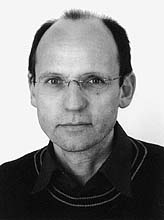
Catholic theologian Oliver Wintzek considers the veneration of human remains as relics to be anachronistic. The fact that a portion of the heart of the so-called Internet apostle Carlo Acutis is currently touring Germany seems very out of date and even macabre, Wintzek told the Evangelical Press Service (epd). There are people who find this appealing and are emotionally moved by it. But for people with a critically enlightened mind, this veneration seems strange. One must distinguish between the veneration of saints as inspiring role models and the veneration of relics.
At the beginning of July, the Vatican announced that Carlo Acutis, an Italian who died in 2006 at the age of 15, would be canonized. Acutis, who died of leukemia, is the first of the "millennial" generation to be canonized. Born in London, Acutis was considered a computer genius and helped develop religious websites. As a result, he was dubbed an "Influencer of God" by the Italian media. Acutis compiled a list of Eucharistic miracles, which is now available to the public on a website and in exhibitions.
The group "Friends of Carlo Acutis" is currently organizing a tour of the teenager's heart relic through Germany. A service with the relic was scheduled for Thursday evening in Hamburg with Archbishop Stefan Heße. Before that, the relic had visited Cologne Cathedral and Munich.
An idiosyncratic blend of modern and anti-modern
This form of worship is a very idiosyncratic blend of modern and anti-modern, said Wintzek, a professor of dogmatic theology and fundamental theology at the Catholic University of Mainz. What's modern about it is the presentation and marketing of the "sneakers-and-sweatpants saint." A kind of relic cult also exists in sports or pop culture, for example, with regard to devotional objects from stars like Taylor Swift.
But, according to Wintzek, "postmodernism is staging something reactionary here under a hip guise." "It's about a piety that wants to connect to a supposedly good time for Catholicism, when everything was still clear and orderly." Behind the scenes, the debate about which form of Catholicism should be practiced today is being played out. In the current reform debates in the Catholic Church, for example, about the role of women, attitudes toward homosexuals, or celibacy, reform skeptics often call for a so-called new evangelization.
"Instead of truly discussing structural changes in the Church, they simply say, 'Put faith in Christ back at the centre,'" said the theologian. "These new evangelization tendencies seek to spiritualize away the demands for reform, both structurally and substantively. But without reform, the new evangelization hangs in the air."
Pope clears the way
"Influencer of God" is canonized
A look at church history shows that the veneration of relics was a development of the early Middle Ages. "In the ancient Church, on the other hand, it would never have occurred to anyone to open martyrs' graves," said Wintzek. The veneration of relics began in the 7th century, but in the form of so-called touch relics. "If people wanted a souvenir from, say, an apostle's tomb, they would hold a piece of cloth or a piece of cloth to this venerated spot and take it home with them."
It was only in the Middle Ages that relics in the form of human remains began to exist, such as the cult surrounding the bones of the Three Wise Men, who found their final resting place in Cologne Cathedral. "The guiding principle here was that the mortal remains functioned as a bridge, so to speak, since the venerated saint was actually already at home with God."
Cardinal Newman who he wants to co-opt to his modernist cause wrote this poem.
Relics of Saints |
"He is not the God of the dead, but of the living; for all live unto Him." |
"THE Fathers are in dust, yet live to God:"— |
| So says the Truth; as if the motionless clay |
| Still held the seeds of life beneath the sod, |
| Smouldering and struggling till the judgment- day. |
And hence we learn with reverence to esteem |
| Of these frail houses, though the grave confines; |
| Sophist may urge his cunning tests, and deem |
| That they are earth;—but they are heavenly shrines. |
Palermo. June 1, 1833. |
And even more to the point from his great work the Apologia!
For myself, lest I appear in any way to be shrinking from a determinate judgment on the claims of some of those miracles and relics, which Protestants are so startled at, and to be hiding particular questions in what is vague and general, I will avow distinctly, that, putting out of the question the hypothesis of unknown laws of nature (which is an evasion from the force of any proof), I think it impossible to withstand the evidence which is brought for the liquefaction of the blood of St. Januarius at Naples, and for the motion of the eyes of the pictures of the Madonna in the Roman States. I see no reason to doubt the material of the Lombard crown at Monza; and I do not see why the Holy Coat at Trèves may not have been what it professes to be. I firmly believe that portions of the True Cross are at Rome and elsewhere, that the Crib of Bethlehem is at Rome, and the bodies of St. Peter and St. Paul also … Many men when they hear an educated man so speak, will at once impute the avowal to insanity, or to an idiosyncrasy, or to imbecility of mind, or to decrepitude of powers, or to fanaticism, or to hypocrisy. They have a right to say so, if they will; and we have a right to ask them why they do not say it of those who bow down before the Mystery of mysteries, the Divine Incarnation?"





.jpeg)

Comments