German Bishop's Conference paper on sexual diversity in Catholic schools is "unscientific, driven by feel-good feelings and acceptance rhetoric"
Preventing discrimination against queer students and instead daring to embrace openness and dialogue: These are the guidelines of a planned paper by the School Commission of the Bishops' Conference. The content is still being worked on.

Questions of gender, sex, and queerness played an important role in the reform debates of the Synodal Path. The debate about sexual diversity, which affects society as a whole and often hurts those affected, has now reached Catholic schools as well.
The vast majority of 2,000 students, teachers, and parents surveyed at Catholic schools identified dealing with the "diversity of sexual identities" as an important task for their school in an online survey. In the survey conducted by the Berlin Institute for Christian Ethics and Politics, approximately 20 percent reported experiencing or observing discrimination against homosexual, trans, or non-binary—i.e., queer—students.
The Catholic bishops, or more precisely their school commission under the leadership of Bishop Heinrich Timmerevers, now want to provide school communities with food for thought, guidelines, and basic knowledge in a roughly 20-page paper to help them respond to the new realities and conflicts.
"Reducing irritations"
The paper advocates for schools that provide space for all students, including non-binary and non-heterosexual young people, making them visible and respecting them. It is important to "identify and reduce existing irritations and uncertainties in dealing with the diversity of sexual identities," the draft text states.
The text, which has not yet been finalized and therefore not yet published, is intended to raise awareness of the situation of queer students and teachers. It draws attention to the fact that many of them experience a painful process of inner insecurity and doubt that lasts for years. Anti-queer prejudices, discrimination, and bullying should have no place in Catholic schools.
The starting point of the text is the assumption that gender identity and sexual orientation cannot be freely shaped or chosen. It explains that children can repeatedly experience "incongruities" in their gender identity until puberty, meaning they are uncertain about their physical and mental gender identity. If this uncertainty becomes entrenched, it can lead to persistent, painful gender dysphoria, according to the paper. It does not take a position on the controversial medical question of whether and when gender-altering hormone treatments or surgeries are advisable.
The school should provide a space "in which children and young people can gain certainty about their sexual orientation and gender identity."
According to the draft text, the goal of a queer-friendly school should be efforts to support the "holistic personality development" of children and young people. This also includes schools providing a space "in which children and young people can gain certainty about their sexual orientation and gender identity."
The dignity of every person must be respected. To do justice to queer young people, the draft text also advocates for gender-fair language, "in which no person inevitably has to assign themselves to a particular gender or is assigned that gender by others." The paper formulates its own recommendations for teachers, students, religious education teachers, and school administrators.
As is customary with episcopal documents, a team of editorial experts prepared the draft text. The draft must now be approved by the Commission and the bishops.
Controversial discussion
A few weeks ago, the Permanent Council held a highly controversial discussion about the paper. Both supporters and critics spoke out. The exact nature of the differences is unknown. The bishops now have several weeks (usually two to four) to formulate criticisms and requests for changes ("modi"). These will be submitted to the School Commission, which will then ultimately approve and publish the paper with the working title "Created, Shaped, and Loved – Visibility and Recognition of the Diversity of Sexual Identities in Schools." When this will happen is currently unclear. A scrapping and abandonment of the text, as some critics have called for, seems highly unlikely.
According to reports, however, the text will not be upgraded to a paper by the German bishops, but will be labeled a publication of the School Commission. This is more of a symbolic difference. Apparently, the draft text has met with approval from the heads of the school departments of the dioceses.
It is clear that the publication of the basic document did not go as smoothly as the bishops had hoped. After its presentation to the Permanent Council, Tübingen moral theologian Franz-Josef Bormann, in particular, positioned himself as the loudest voice of criticism. With pointed, sharp accusations, he claimed that the document was unscientific, driven by feel-good and acceptance rhetoric, and concealed the medical and psychological problems of many queer or transgender youth.

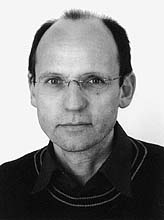
Criticizing the unpublished text: Franz-Josef Bormann.
Bormann is particularly bothered by the fact that the document does not take a clear stance based on Catholic moral teaching. In particular, the principle of binary gender is relativized. Instead of a normative assessment, he said, the text is about "diffuse rhetoric of respect." The internal medical controversy surrounding the support and treatment of adolescents with gender dysphoria is also completely ignored.
"Teachers, for example, need to know that a large number of children who identify as trans have comorbid mental illnesses that require treatment. They require psychotherapeutic support," Bormann says. "And the paper also omits the fact that the vast majority of insecurities about one's own gender identity are only temporary."
The planned church paper, however, explicitly states that it does not want to make any "sexual moral judgments" but rather to emphasize school pedagogical priorities. The chapter on trans youth is relatively brief.
No comment
Neither the Bishops' Conference nor the authors of the paper currently wish to comment on the content of the criticism. They point out that the paper is open for discussion once its current version is published. Critics, however, want to influence its content even before its publication.
It is also clear that corresponding school guidelines already exist regionally. Recently, for example, the Archdiocese of Hamburg published a framework for its Catholic schools. The Hamburg guidelines are intended to encourage individual schools to openly address diversity and sexual identity. "We promote awareness of the diversity of gender identities and sexual orientations," it states, for example. In the Archdiocese of Freiburg, a transgender person was recently appointed as a religious education teacher for the first time. And in the Diocese of Passau, a Queer Working Group was founded, which has since recognized the first Catholic school as queer-friendly. At the same time, the working group's spokesperson, Rebecca Sürth, regrets that Bishop Stefan Oster of Passau does not permit blessings or blessing ceremonies for same-sex or queer couples. "We organize queer services, but we are not allowed to grant God's blessing to queer couples."
The draft school paper does not address this debate. But the text calls for keeping the question of God alive, especially in Catholic schools—and this includes the question of one's own identity: "Keeping the question of God alive is demonstrated first and foremost by not shielding the diversity of sexual identity from the question of God and entrusting it solely to sex education." Questions of identity are fundamental questions that also become questions about God: "What and how am I? Am I wanted, what and how I am?"





.jpeg)

Comments