Experts now resort to game theory to predict new Pope and come up with a disastrous prediction
Experts throw a new name into the mix: This Cardinal is set to become the new Pope

For days, the favorites to succeed Pope Francis have been repeatedly named. Two researchers now surprise with an unexpected forecast.
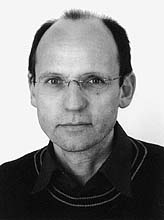
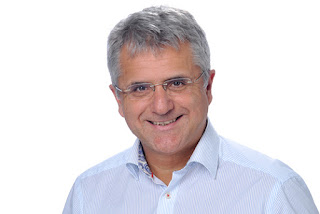
Vatican – The election of a new Pope is not only a major ecclesiastical event, but also an exciting field for game theory analysis, as two Hungarian economists prove. László Á. Kóczy and Balázs R. Sziklai have already analyzed the most promising candidates ahead of the upcoming conclave. At the top of their list is a Canadian cardinal. According to the Austrian Press Agency (APA), the two experts have already predicted the election of Pope Francis.
Potential new Pope holds similar views to Francis
The experts' model is based on two key indicators: ideological orientation and geographical distance from Rome. Cardinals who take either extreme or moderate positions are particularly influential. Jorge Mario Bergoglio, who was elected Pope Francis at the time, was considered ideologically moderate, but at the same time, as he himself said, "came from the other side of the world." Francis came third in the 2013 calculation.
According to two experts, this man will be Pope Francis's successor: Michael Czerny, 79 years old.
If Kóczy and Sziklai are to be believed, Cardinal Michael Czerny (79) from Canada will succeed him with a probability of 13.2 percent. In contrast to most of the other favorites, he represents an approach that is similar to Francis's vision, as his biography reveals. He is committed to social justice, minorities, and the environment, among other issues. Before becoming a cardinal, he worked under Francis as undersecretary of the Department for Migrants and Refugees.
German Cardinals have good chances – "Wouldn't bet on tt now"
Following Czerny are Cardinals Carlos Castillo Mattasoglio of Peru, Pablo Cezar Costa of Brazil, José Cobo Cano of Spain, and Francesco Montenegro of Italy, each with 12.6 percent. Also making the top ten are Mario Grech of Malta, John Dew of New Zealand, Leonardo Ulrich Steiner of Brazil, Juan José Omella of Spain, and the Italian Domenico Battaglia. However, the three German candidates also have good chances, each receiving over seven percent.
For the current conclave, which begins on Wednesday (May 7), the Hungarian experts have refined their model by recording the cardinals' ideological positions in more detail and introducing per capita gross domestic product as a new indicator. This was intended to take into account the fact that "Australia is considered part of the first world," Kóczy explained in an interview with APA, according to media reports – unlike Africa, which is closer to Rome.
Who will succeed Francis?
Cardinal Pierbattista Pizzaballa has long been considered one of the top candidates to succeed Pope Francis – was the hype too much?
"It's an interesting experiment, but I wouldn't bet money on it right now," said Kóczy. For game theorists, the papal election is interesting because individual voters have a great deal of autonomy. This is not the case in political bodies, where voting behavior is influenced by party loyalties or geographical proximity. As a Catholic, he believes in the Holy Spirit, "but he works through people." The conclave is therefore unlikely to produce "a result that will be difficult to explain."





.jpeg)

Comments